Calibrating your experience
Omega · Speedmaster · Moonwatch · Professional Moonwatch Master Chronometer - Cal. 3861

Speedmaster Professional Moonwatch 42mm Master Chronometer
Ref: 310.30.42.50.01.004
Black Lacquer Dial with White Subdial 'Reverse Panda' on Steel Bracelet
Also known as “Reverse Panda Moonwatch”

Today’s Market Value
$9,068
(MSRP $10,400)
Editorial Article
Few chronographs carry the weight of history quite like the Omega Speedmaster Professional, and even fewer can change their personality so dramatically through a seemingly simple reversal of color. Introduced on January 13, 2026, the Speedmaster Moonwatch Professional “Reverse Panda” brings a striking new interpretation to one of watchmaking's most recognizable designs. Its glossy black dial, recessed white chronograph counters, polished ceramic bezel, and beautifully sculpted stainless steel case create an appearance that feels simultaneously familiar and refreshingly contemporary. Yet this is considerably more than a conventional Moonwatch fitted with a different dial. Omega developed an elaborate two-layer dial construction that introduces unusual visual depth, combining traditional chronograph legibility with a level of finishing more commonly associated with contemporary luxury sports watches. Beneath that distinctive exterior remains the manually wound movement, mechanical architecture, and extraordinary historical lineage that made the Speedmaster an enduring symbol of human exploration. The result is a watch that celebrates nearly seventy years of chronograph development while demonstrating that even an established icon can find new ways to surprise its admirers. The Speedmaster's story begins in 1957, when Omega introduced reference CK2915 as part of its celebrated trilogy of professional watches alongside the Seamaster 300 and Railmaster. Designed primarily for motorsport rather than space exploration, the original Speedmaster featured a chronograph movement, highly legible dial, and a tachymeter scale positioned on the external bezel rather than around the dial's perimeter. This arrangement allowed drivers to calculate average speed over a measured distance while preserving valuable space for the chronograph's timing displays. Its manually wound caliber 321, developed from a Lemania movement architecture, employed a sophisticated column-wheel mechanism that would later become integral to the Speedmaster's legendary reputation. The collection evolved rapidly, adopting black bezels, redesigned hands, and increasingly recognizable case proportions during the early 1960s. In 1964, Omega introduced the asymmetrical case with protective shoulders around the crown and chronograph pushers, establishing the silhouette that continues to define the Moonwatch. What began as a practical instrument for the racetrack was about to become associated with an entirely different form of speed, one measured not in laps completed but in miles traveled beyond the Earth. The Speedmaster's transformation into the Moonwatch is one of the most remarkable stories in modern horology. During the early 1960s, NASA began evaluating commercially available chronographs for use by astronauts during human spaceflight. The Omega Speedmaster successfully completed a demanding series of environmental and mechanical tests, earning official qualification for crewed space missions in 1965. Its reputation was established through actual service rather than a watch developed solely for promotional association with space exploration. Speedmasters accompanied astronauts during the Gemini program and became essential equipment during the Apollo missions. On July 21, 1969, Buzz Aldrin wore his Speedmaster on the lunar surface, making it the first watch worn on the Moon. The chronograph subsequently played another important role during Apollo 13, when the crew used a Speedmaster to time critical engine burns during their effort to return safely to Earth. These achievements transformed a capable mechanical instrument into a cultural landmark. Although modern Speedmasters incorporate substantial technical improvements, their fundamental appearance remains closely connected to the watches that accompanied humanity's earliest journeys beyond Earth. The black-and-white dial arrangement has its own distinguished history within mechanical chronographs. Frequently described as a reverse panda, the combination places contrasting white timing counters against a predominantly black dial, creating strong visual separation between the principal time display and the chronograph's subsidiary functions. Such designs became particularly recognizable during the 1960s and 1970s, when chronograph manufacturers experimented with contrasting registers to improve legibility and establish distinctive sporting identities. Omega has explored similar arrangements through several memorable Speedmaster editions, including the 2017 Speedy Tuesday limited edition, which combined a matte black dial with contrasting luminous registers inspired by historical Alaska Project experimentation. Other special Speedmasters incorporated panda-style configurations, but the contrasting treatment generally remained associated with commemorative or relatively specialized releases. The 2026 Reverse Panda represented an important departure by bringing this visual language into the regular-production Moonwatch Professional collection. Rather than recreating an earlier limited edition, Omega developed a new interpretation that combined historical inspiration with more elaborate dial finishing and contemporary materials. The dial is unquestionably its defining feature. Its glossy black surface is constructed from a polished upper plate finished with layers of varnish and lacquer, creating a remarkably deep, reflective appearance. Beneath it sits a second plate carrying the white chronograph counters, whose recessed surfaces are similarly varnished and lacquered. The resulting architecture introduces a pronounced sense of dimension, particularly around the three subsidiary registers, where polished rhodium-plated borders emphasize the contrast between the black upper surface and white lower displays. Running seconds occupy the register at nine o'clock, while elapsed minutes and hours are recorded at three and six respectively. The familiar stepped outer dial preserves an important historical Speedmaster characteristic, while white printing on the main dial and black markings within the subsidiary counters maintain clarity. Applied hour markers and the Omega emblem introduce additional refinement, complemented by luminous hands and markers that remain functional in darkness. The black lacquer is considerably more reflective than the familiar matte finish of the traditional Moonwatch, giving the watch a richer and more dynamic appearance as lighting conditions change. It is a carefully considered reinterpretation rather than a simple exchange of black and white paint. Surrounding the dial is the familiar 42-millimeter asymmetrical stainless steel case, whose twisted lyre lugs and alternating brushed and polished surfaces remain closely connected to the fourth-generation Speedmasters of the 1960s. Omega retained the recognizable crown guards, flat-topped chronograph pushers, and sculpted case profile introduced during that formative period. The black bezel, however, receives a significant material upgrade. Instead of the traditional aluminum insert, the Reverse Panda employs polished black ceramic with a white enamel tachymeter scale. The historically significant dot positioned above the numeral ninety remains, preserving a subtle visual connection to early Speedmasters while introducing greater resistance to everyday scratching. A box-shaped sapphire crystal recalls the appearance of the Hesalite crystals fitted to historical Moonwatches, offering modern scratch resistance and an anti-reflective treatment on its inner surface. The case measures approximately 13.5 millimeters thick, making it slightly taller than the standard sapphire Moonwatch because of the elaborate dial construction. The stainless steel bracelet retains the refined five-link design introduced with the modern Moonwatch generation, combining carefully finished surfaces with an adjustable folding clasp. Its compact lug-to-lug proportions help the watch wear more comfortably than its stated diameter might suggest, although its substantial chronograph case remains unmistakably present on the wrist. The movement beneath the sapphire exhibition caseback is Omega's manually wound Co-Axial Master Chronometer caliber 3861, the culmination of decades of Speedmaster movement development. Its historical lineage extends from the original column-wheel caliber 321 through the cam-operated caliber 861 introduced in 1968 and the later caliber 1861 that powered generations of Moonwatches. The 3861 preserves the fundamental architecture associated with the latter movements while incorporating substantial modern refinements. Its Co-Axial escapement, silicon balance spring, and advanced anti-magnetic construction represent important departures from the mechanisms used during the Apollo era. Master Chronometer certification by the Swiss Federal Institute of Metrology confirms performance under demanding conditions, including resistance to magnetic fields reaching 15,000 gauss. The movement provides approximately 50 hours of power reserve and retains the traditional manually wound operation that has long been part of the Speedmaster Professional's identity. Visible through the transparent caseback, its rhodium-plated surfaces and decorative finishing offer an additional dimension of mechanical appreciation. Although the 3861 lacks the column-wheel architecture of the original caliber 321, it represents a successful evolution of the robust chronograph movements that sustained the Moonwatch's reputation for decades. For collectors, the Reverse Panda occupies a distinctive position within Omega's continuing reinterpretation of its most historically important watch. Its introduction follows the comprehensive modernization of the Moonwatch in 2021 and the popular white lacquer-dial edition introduced in 2024, illustrating Omega's willingness to explore new visual identities without abandoning the essential character of the Speedmaster Professional. The unusually elaborate two-layer dial, polished ceramic bezel, contrasting subsidiary registers, and refined bracelet distinguish the reference from the conventional black-dial Moonwatch in ways that extend beyond color alone. Its appearance also connects it to the wider tradition of contrasting-register racing chronographs, providing a visual relationship with historical designs beyond Omega's own collection. Unlike many earlier contrasting-dial Speedmasters, the 2026 model was introduced as part of the regular production range rather than as a numbered limited edition. Its collector appeal therefore rests on the distinctiveness of its construction, the historical significance of the Moonwatch platform, and its recognizable place within the evolution of Omega's contemporary chronographs. The watch does have limitations. Its polished dial and bezel can reveal fingerprints and reflections more readily than matte surfaces, the increased case thickness may be noticeable to some wearers, and its 50-meter water resistance is modest compared with dedicated sports or diving watches. Manual winding also requires regular attention, although many enthusiasts regard this daily interaction as an essential part of the Moonwatch experience. Ultimately, the Omega Speedmaster Moonwatch Professional Reverse Panda succeeds because it understands the difference between preserving an icon and refusing to let that icon evolve. Its glossy black dial and brilliant white counters introduce a bold contemporary personality, while the carefully constructed case, historical tachymeter details, and manually wound chronograph movement maintain an unmistakable connection to the watches that accompanied humanity into space. The combination of ceramic, lacquer, sapphire, and modern chronometric engineering demonstrates how far the Speedmaster has advanced since 1957, even as its defining architecture remains remarkably consistent. For enthusiasts who appreciate the historical importance of the Moonwatch but desire something more visually expressive than its traditional matte black configuration, this watch offers a compelling interpretation. It is sophisticated without becoming unnecessarily complicated, striking without abandoning functional clarity, and modern without pretending that its extraordinary past no longer matters. Few watches can claim a genuine connection to both the golden age of motorsport chronographs and the first human footsteps on another world. The Reverse Panda carries that heritage forward with a different face, reminding us that even after nearly seven decades, the Speedmaster still has new stories to tell.
Market Dynamics
Scores from TimeAuthentic's latest AI market valuation of this reference.
Market data is compiled using AI-assisted research and extraction, and may contain inaccuracies.
Technical Data
Case
Shape
Round
Material
Stainless steel case and bracelet
Glass
Box-form sapphire, anti-reflective coating
Bezel
Fixed black ceramic tachymeter, white enamel scale
Case Back
Display sapphire crystal, screw-in steel
Dimension
42mm
Lug Distance
20mm
Lug-to-lug
47.5mm
Thickness
13.54mm
Water Resistance
50m / 5bar / 165ft
Weight
142g
Dial & Hands
Dial Color
Black with white subdials
Hour Markers
Applied indices, rhodium-plated, Super-LumiNova
Hands
Rhodium-plated baton hands, Super-LumiNova
Movement & Functions
Movement Type
Mechanical manual-wind
Functions
Hours, minutes, small seconds, chronograph
Caliber
3861Movement Description
Co-Axial, column-wheel, Master Chronometer, 50-hour reserve
Winding Type
Manual-wind
Power Reserve
50 Hours
Frequency
3 Hz / 21,600 vph
Jewels
26
Hacking Seconds
Yes
Quickset Date
No
Escapement Type
Co-Axial escapement
Hairspring Type
Silicon Si14 free-sprung balance spring
Certification
METAS Master Chronometer
Strap
Material
Stainless-steel Moonwatch bracelet
Buckle
Steel folding clasp, comfort adjustment
General
Magnetic Resistant
15,000 gauss
Authentication Guide
Every TimeAuthentic marketplace transaction is designed to route through verification before final release. The watch is reviewed against the exact reference configuration, photographed, documented, and tied to its transaction record so buyers and sellers move through a consistent, trust-forward process.
Watch Passport
The TimeAuthentic Watch Passport is the identity layer attached to qualifying watches that move through authentication, service, vaulting, or purchase flows within the platform. It is designed to connect the watch, its documented handling history, and its supporting evidence into one consistent ownership record.
Continue Exploring
Similar watches
Omega
$9,218
Speedmaster - Tokyo 2020 Olympic Editions
522.30.42.30.03.002
Blue Dial, Steel Bracelet
Omega
$9,482
Speedmaster - Tokyo 2020 Olympic Editions
522.30.42.30.04.001
Silver Panda, Steel Bracelet

Omega
$5,586
Diver 300M
210.30.42.20.01.010
Black Dial on Mesh
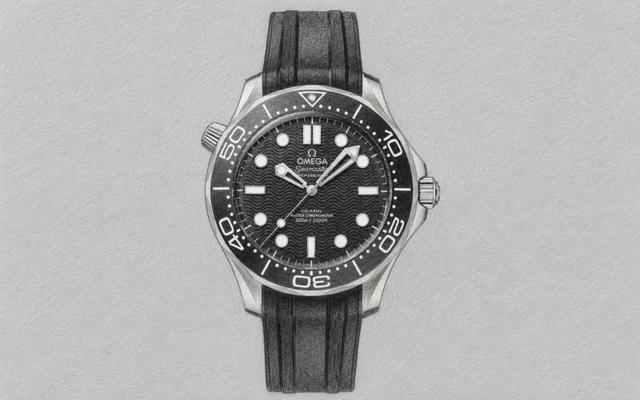
Omega
$5,171
Diver 300M
210.32.42.20.01.003
Black Dial on Rubber Strap

TUDOR
$9,669
Black Bay Chrono
M79360N-0024
Flamingo-Blue Turquois Dial on 5-Link Steel Bracelet

TUDOR
$7,999
Black Bay Chrono
M79360N-0019
Pink Dial on 5-Link Steel Bracelet

TUDOR
$8,233
Pelagos FXD Chrono
25827KNRS-0002
Black Carbon with Pink Detail

Rolex
$8,667
Air King
126900-0001
Current gen

Rolex
$9,218
Explorer
224270
40mm Oystersteel (Current Model)

Rolex
$9,619
Oyster Perpetual 41
134300-0001
Silver Dial