Calibrating your experience
Omega · Speedmaster · Moonwatch · Professional Moonwatch Master Chronometer - Cal. 3861

Speedmaster Professional Moonwatch Apollo 11 - 50th Anniversary Edition
Ref: 310.60.42.50.99.001
Solid Moonshine Gold
Also known as “Gold Apollo 11”

Today’s Market Value
$37,274
(MSRP $40,100)
Editorial Article
On July 20, 1969, humanity accomplished something that had seemed almost impossible just a decade earlier: two astronauts landed on the Moon while millions watched from Earth. Fifty years later, Omega celebrated that extraordinary achievement with two remarkable Speedmasters that approached the same historical moment from very different perspectives. One combined stainless steel with the warm glow of Moonshine Gold, incorporating miniature depictions of the lunar landing into a familiar chronograph design. The other embraced solid gold, recalling an extraordinary commemorative Speedmaster presented to astronauts in the aftermath of Apollo 11. Both were powered by the newly developed Co-Axial Master Chronometer caliber 3861, making them especially significant in the mechanical evolution of the Moonwatch. Introduced in 2019, these anniversary editions were more than decorative tributes to a famous space mission. They celebrated the watch's genuine role in one of humanity's greatest achievements while introducing the movement technology that would define the next generation of Speedmaster Professionals. The Speedmaster's journey began in 1957, when Omega introduced a professional chronograph designed primarily for motorsport. Its external tachymeter bezel, highly legible dial, and manually wound caliber 321 established a distinctive design that would evolve into one of the most recognizable mechanical watches ever produced. During the early 1960s, NASA began evaluating commercially available wristwatches for use during human spaceflight, subjecting several chronographs to demanding environmental and mechanical tests. The Speedmaster emerged successfully, earning official qualification for crewed missions in 1965. Its rugged construction and dependable chronograph functions made it a practical companion during the Gemini program and subsequent Apollo missions. By the time Apollo 11 departed Earth in July 1969, the Speedmaster had become an established part of an astronaut's equipment. Neil Armstrong left his watch aboard the lunar module as a backup timing instrument, while Buzz Aldrin wore his Speedmaster during his historic walk across the lunar surface. The watch consequently became the first wristwatch worn on the Moon, transforming a capable sporting chronograph into an enduring symbol of exploration. Omega's relationship with Apollo 11 did not end when the astronauts returned to Earth. In November 1969, the company held a celebratory dinner in Houston and presented specially produced yellow-gold Speedmasters to NASA astronauts and other figures associated with the American space program. These extraordinary watches featured solid gold cases, bracelets, and dials, together with burgundy-colored bezels and distinctive black onyx hour markers. The original commemorative series comprised 1,014 examples, with individually numbered watches allocated to astronauts and other recipients. Their combination of precious metals, unusual colors, and direct historical associations established a particularly fascinating chapter in Speedmaster collecting. The watches were not developed for use in space; instead, they represented a tangible expression of gratitude and recognition following the success of the Apollo program. Five decades later, Omega returned to this celebrated design as the inspiration for the more elaborate of its anniversary editions, creating a direct connection between the original presentation watches and the modern mechanical technology of the Moonwatch. The solid-gold anniversary Speedmaster was the first of the two commemorative models to appear in 2019, and its design remained closely connected to its historical predecessor. Omega manufactured its 42-millimeter case and five-link bracelet from 18-karat Moonshine Gold, a proprietary alloy with a paler appearance than conventional yellow gold and improved resistance to color changes over time. The vertically brushed gold dial retained the distinctive stepped construction associated with historical Speedmasters, complemented by faceted black onyx hour markers and contrasting hands. Its burgundy ceramic bezel introduced a modern interpretation of the original's colorful aluminum insert, preserving the recognizable relationship between warm gold and deep red. Omega limited production to 1,014 individually numbered examples, deliberately matching the quantity produced for the original 1969 commemorative series. The result was a remarkably faithful interpretation of a historically important watch, yet one that incorporated contemporary materials and substantially more advanced mechanical engineering. Its appearance was unmistakably luxurious, but the design remained rooted in a genuine connection to the astronauts who had helped establish the Speedmaster's extraordinary reputation. The gold edition's most imaginative historical tribute appeared on the reverse of the case. Surrounding the sapphire exhibition window was a beautifully detailed decorative ring depicting a portion of Earth, with the American continents rendered against a blue ocean. A small domed fragment of lunar meteorite represented the Moon, creating an extraordinary connection between the watch and the celestial body it commemorated. The relative arrangement of Earth and Moon transformed the caseback into a miniature representation of the Apollo mission's destination, while allowing the owner to appreciate the movement beneath. Omega also developed a special version of the caliber 3861 with Moonshine Gold-plated components and burgundy-colored markings, visually connecting the mechanism to the watch's distinctive exterior. The presentation box continued the theme, incorporating a crater-like lunar surface that transformed the watch's packaging into part of the commemorative experience. These details made the anniversary edition considerably more than a precious-metal variation of the conventional Moonwatch. It was a carefully constructed historical tribute whose significance extended from the materials of the case to the smallest decorative elements surrounding its movement. The stainless steel anniversary Speedmaster, introduced shortly afterward, approached the same historical moment with a more contemporary and playful interpretation. Its 42-millimeter case retained the familiar asymmetrical Moonwatch profile, but incorporated a polished Moonshine Gold bezel surrounding a black ceramic insert with an engraved Ceragold tachymeter scale. The dial combined a varnished gray central surface with a black outer section, creating an unusual two-tone arrangement that departed substantially from the traditional matte black Moonwatch. Gold hands and applied markers introduced a restrained connection to the solid-gold edition, while the hour marker at eleven o'clock was replaced by a distinctive gold numeral commemorating Apollo 11. At nine o'clock, the running-seconds register featured a blackened Moonshine Gold plate engraved with the image of Buzz Aldrin descending the lunar module's ladder toward the Moon. The depiction transformed an ordinary chronograph counter into a miniature historical scene without disrupting the familiar three-register arrangement. Limited to 6,969 numbered examples, the watch combined the essential character of the Speedmaster Professional with a collection of thoughtful commemorative details that rewarded close examination. The steel edition's caseback continued the storytelling through a sapphire-covered medallion depicting an astronaut's footprint on the lunar surface. Surrounding it were commemorative inscriptions, including the famous words spoken by Neil Armstrong as he stepped onto the Moon. Unlike the gold edition, whose transparent caseback displayed the movement beneath a decorative celestial scene, the steel watch placed the footprint itself at the center of the composition. Its polished and brushed bracelet drew inspiration from historical Speedmaster construction, combining relatively flat links with a distinctive vintage character. Omega also supplied an additional strap featuring Velcro and black-coated cork, together with a specialized presentation box incorporating a lunar-module-inspired watch stand. These details reflected the company's willingness to treat the anniversary as an opportunity for genuine historical storytelling rather than simply adding a commemorative inscription to a familiar watch. The combination of Aldrin's descent on the dial and the footprint on the caseback created a particularly evocative narrative, connecting the excitement of the first lunar landing with the mechanical instrument that accompanied the astronauts throughout their extraordinary journey. Beneath their different exteriors, both anniversary editions introduced one of the most important developments in the Speedmaster's modern history. Omega's manually wound caliber 3861 represented a substantial evolution of the movement architecture that had powered the Moonwatch since the late 1960s. Its lineage extended through the celebrated calibers 861 and 1861, which succeeded the original column-wheel caliber 321 and established a reputation for dependable chronograph performance. The new movement retained the familiar cam-operated chronograph construction while incorporating Omega's Co-Axial escapement, a silicon balance spring, and advanced resistance to magnetic interference. Master Chronometer certification by the Swiss Federal Institute of Metrology confirmed its performance under demanding conditions, including exposure to magnetic fields reaching 15,000 gauss. The movement also offered approximately 50 hours of power reserve, together with improved precision and modern mechanical refinements. Its introduction was especially significant because it demonstrated that Omega could preserve the fundamental architecture and character of the historical Moonwatch while substantially improving the engineering beneath the dial. The anniversary editions provided an early showcase for this technology before the caliber became the foundation of the modern Speedmaster Professional collection in 2021. For collectors, the Apollo 11 fiftieth-anniversary Speedmasters occupy an unusually meaningful position within Omega's history. The solid-gold edition connects directly to the commemorative watches presented to astronauts in 1969, preserving their distinctive combination of gold, burgundy, and black onyx while introducing a remarkable meteorite caseback. The stainless steel interpretation offers a different historical experience, bringing the lunar landing itself into the design through miniature engraved scenes and carefully selected commemorative details. Their respective production limits provide clearly defined identities, while their shared caliber 3861 establishes an important mechanical connection to the subsequent evolution of the Moonwatch. Originality and completeness are particularly relevant to both editions, given their unusual components, individually numbered cases, distinctive bracelets, and elaborate presentation accessories. There are practical compromises as well. Their manually wound movements require regular attention, their 50-meter water resistance is modest compared with specialized sports watches, and the solid-gold version possesses a substantial weight and visual presence that may not suit every occasion. Yet these characteristics are part of the experience of owning historically inspired mechanical chronographs. The two editions remain compelling because they unite genuine horological development with one of the most consequential achievements in human exploration. Their importance reaches beyond the world of watch collecting, demonstrating how an instrument originally designed for motorsport became part of the equipment carried by humanity into an entirely new environment. More than half a century after Apollo 11, these Speedmasters preserve that extraordinary connection while reminding us that even the most familiar mechanical watch can continue to evolve without losing sight of the history that made it important.
Market Dynamics
Scores from TimeAuthentic's latest AI market valuation of this reference.
Market data is compiled using AI-assisted research and extraction, and may contain inaccuracies.
Technical Data
Case
Shape
Round
Material
18K Moonshine Gold case and bracelet
Glass
Domed, anti-reflective sapphire crystal
Bezel
Burgundy Ceragold tachymeter scale
Case Back
Display sapphire back; gold ring, meteorite inlay
Dimension
42mm
Lug Distance
20mm
Lug-to-lug
47.5mm
Thickness
13.2mm
Water Resistance
50m / 5bar / 165ft
Weight
220g
Dial & Hands
Dial Color
Solid 18K Moonshine Gold
Hour Markers
Faceted black onyx indexes, gold settings
Hands
Gold hour-minute hands, black varnish, no lume
Movement & Functions
Movement Type
Mechanical, manual-wind
Functions
Hours, minutes, small seconds, chronograph, tachymeter
Caliber
3861MMovement Description
Co-Axial, 26 jewels, 50-hour reserve, 15,000-gauss resistance
Winding Type
Manual-wind
Power Reserve
50 hours
Frequency
3 Hz / 21,600 vph
Jewels
26
Hacking Seconds
Yes
Quickset Date
No
Escapement Type
Omega Co-Axial escapement
Hairspring Type
Silicon Si14, flat hairspring
Certification
COSC chronometer; METAS Master Chronometer (cased watch)
Magnetic Resistance
15,000 gauss / 1,500 mT
Strap
Material
Five-row 18K Moonshine Gold bracelet
Buckle
Folding clasp in 18K Moonshine Gold
General
Magnetic Resistant
15,000 gauss
Authentication Guide
Every TimeAuthentic marketplace transaction is designed to route through verification before final release. The watch is reviewed against the exact reference configuration, photographed, documented, and tied to its transaction record so buyers and sellers move through a consistent, trust-forward process.
Watch Passport
The TimeAuthentic Watch Passport is the identity layer attached to qualifying watches that move through authentication, service, vaulting, or purchase flows within the platform. It is designed to connect the watch, its documented handling history, and its supporting evidence into one consistent ownership record.
Continue Exploring
Similar watches
Omega
$38,076
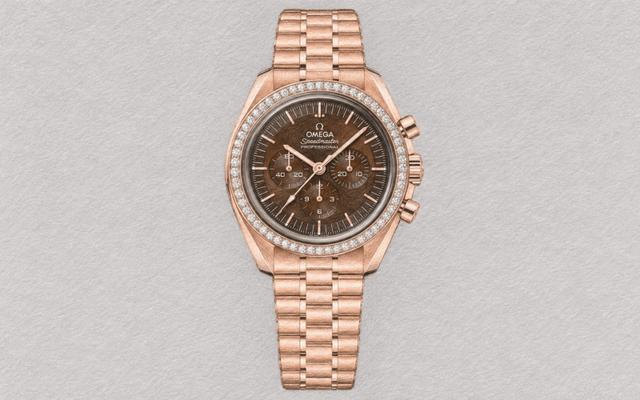
Speedmaster Professional Moonwatch 42mm Master Chronometer
310.55.42.50.13.001
Sedna Gold with Diamond-Set Bezel

Omega
$38,293
Speedmaster Professional Moonwatch 42mm Master Chronometer
310.60.42.50.01.002
Black 'Reverse Panda' Dial on Solid Moonshine Gold

Omega
$5,586
Diver 300M
210.30.42.20.01.010
Black Dial on Mesh
Omega
$5,171
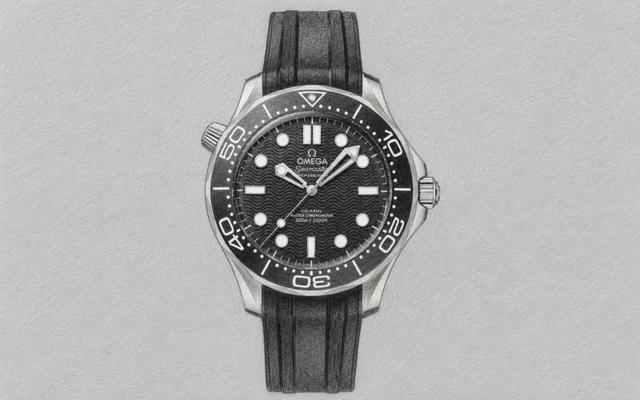
Diver 300M
210.32.42.20.01.003
Black Dial on Rubber Strap

Rolex
$39,078
Cosmograph Daytona
126500LN-0001
Oystersteel White Dial 'Panda'

Rolex
$31,062
Cosmograph Daytona
126500LN-0002
Oystersteel Black Dial 'Reverse Panda'
Rolex
$37,826
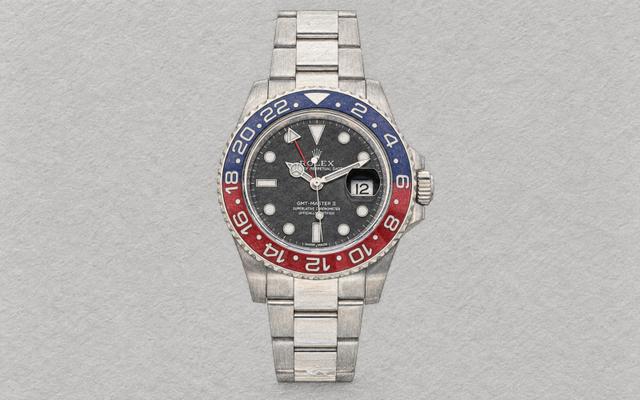
GMT-Master II
116719BLRO-0001
18kt White Gold, Red and Blue Bezel, Black Dial on Oyster

Rolex
$37,926
GMT-Master II
116718LN-0001
18kt Yellow Gold, Black Bezel on Oyster

Rolex
$40,217
Sky-Dweller
336235-0003
18kt Everose Gold, Intense White Dial on Oysterflex

Rolex
$40,580
Sky-Dweller
336238-0002
18kt Yellow Gold, Bright Black Dial on Oysterflex