Calibrating your experience
Omega · Speedmaster · Moonwatch · Ceramic 'Side of the Moon' · Grey Side of the Moon

Speedmaster Grey Side of the Moon
Ref: 311.63.44.51.99.001
Grey Gibeon Meteorite Dial on Alligator Strap with Pinbuckle
Also known as “Grey Side of the Moon Meteorite”

Today’s Market Value
$11,924
(MSRP $19,300)
Editorial Article
What happens when one of the most famous watches in human history decides to explore the darker side of its personality? In 2013, Omega answered that question with the Speedmaster Dark Side of the Moon, a remarkable reinterpretation of its legendary chronograph constructed almost entirely from black ceramic. It was an audacious departure from the familiar stainless steel Moonwatch, trading conventional materials for a sculptural case, deeply reflective surfaces, and an unmistakably contemporary appearance. Yet the experiment proved far more significant than a change of color. The Dark Side of the Moon established an entirely new branch of the Speedmaster family, eventually expanding into gray, white, blue, and more elaborate interpretations featuring precious metals, meteorite dials, and extraordinary lunar-inspired mechanical decoration. These watches brought modern materials engineering into one of Swiss horology's most historically important collections, demonstrating that the Speedmaster could remain connected to the Apollo program while evolving beyond the appearance of the instruments worn by its astronauts. More than a decade after its introduction, the series continues to explore the relationship between mechanical tradition, advanced manufacturing, and the extraordinary visual possibilities of ceramic. The story begins in 1957, when Omega introduced the original Speedmaster as a professional chronograph designed primarily for motorsport. Its external tachymeter bezel, highly legible dial, and manually wound movement established a practical instrument whose appearance would become one of the most recognizable designs in watchmaking. During the early 1960s, NASA began evaluating commercially available chronographs for use in human spaceflight, eventually qualifying the Speedmaster for crewed missions in 1965. The watch accompanied astronauts throughout the Gemini and Apollo programs, becoming the first wristwatch worn on the Moon when Buzz Aldrin stepped onto the lunar surface in July 1969. An equally important chapter unfolded seven months earlier, in December 1968, when Apollo 8 became the first crewed spacecraft to leave Earth's orbit and circle the Moon. Astronauts Frank Borman, Jim Lovell, and William Anders became the first humans to observe the lunar far side directly, temporarily disappearing from radio contact as their spacecraft passed behind the Moon. Each carried an Omega Speedmaster, establishing a particularly meaningful historical connection to the unexplored lunar landscapes that would eventually inspire the ceramic collection. The original Dark Side of the Moon represented one of Omega's most ambitious experiments with contemporary case materials. Introduced at Baselworld in 2013, it featured a substantial 44.25-millimeter case manufactured from black zirconium-oxide ceramic, accompanied by a matching ceramic bezel, crown, pushers, and dial. Unlike a conventional stainless steel watch treated with a dark surface coating, its black appearance was integral to the ceramic material itself. This distinction was important because the construction offered exceptional resistance to ordinary surface scratching while eliminating the possibility of a decorative coating wearing away to reveal a differently colored metal beneath. The case combined polished and brushed finishes, demonstrating that ceramic could accommodate surprisingly sophisticated surface treatments. Its black dial featured two recessed chronograph counters, a date display at six o'clock, and applied hour markers that introduced depth without compromising readability. Red Speedmaster lettering provided a restrained accent, while a black fabric strap completed the distinctly modern appearance. Beneath the sapphire exhibition caseback was Omega's automatic Co-Axial caliber 9300, whose column-wheel chronograph architecture and combined elapsed-minute and hour counter represented a substantial departure from the traditional manually wound Moonwatch. The success of the original encouraged Omega to explore the expressive possibilities of ceramic far beyond black. In 2014, the Grey Side of the Moon introduced a metallic-looking gray ceramic case inspired by the lunar landscape, paired with an extraordinary platinum dial that gave the watch a distinctly different character. The following year brought several more adventurous interpretations, including the White Side of the Moon, whose brilliant white ceramic case, dial, and bezel created one of the most unconventional Speedmasters ever produced. The Dark Side family also expanded through variations that explored different approaches to contrast and finishing. The Pitch Black emphasized nighttime legibility through luminous details, while the Black Black adopted an almost entirely monochromatic appearance that prioritized visual drama over conventional readability. The Vintage Black introduced warm, aged-looking accents, and the Sedna Black combined black ceramic with Omega's proprietary rose-gold alloy. Meteorite-dial interpretations added another remarkable dimension, incorporating material originating beyond Earth into a watch already deeply connected to space exploration. The Blue Side of the Moon subsequently explored rich blue ceramic and celestial-inspired decorative details, demonstrating that the collection's central idea was never limited to the color black. The Apollo 8 editions brought the collection's historical inspiration into particularly sharp focus. Introduced in 2018 to commemorate the fiftieth anniversary of the mission, the first Dark Side of the Moon Apollo 8 featured a skeletonized dial that revealed a manually wound movement decorated to resemble the lunar surface. Omega used laser ablation to create intricate textures across the movement's bridges and main plate, reproducing the rugged appearance of craters, ridges, and other geological formations. The front represented the Moon's familiar near side, while the movement visible through the exhibition caseback depicted its far side. Brilliant yellow accents introduced a dramatic contrast against the black ceramic case, creating an appearance that was both technically intricate and visually unmistakable. In 2024, Omega substantially refined the concept with the Master Chronometer caliber 3869, introducing more detailed lunar engraving and upgraded mechanical performance. A particularly delightful addition was the miniature Saturn V rocket serving as the running-seconds hand, manufactured from titanium through an intricate laser-turning process. These watches transformed the movement itself into a miniature astronomical landscape, allowing the Speedmaster's historic connection to lunar exploration to become an integral part of its mechanical architecture. The series has also demonstrated Omega's willingness to connect its ceramic expertise with other forms of high-performance engineering. The Speedmaster Dark Side of the Moon Alinghi, introduced in 2020 through the company's partnership with the Swiss sailing team, incorporated dramatic red accents and a carbon-fiber-inspired decorative treatment. Its manually wound movement featured distinctive technical finishing, reinforcing the relationship between advanced materials, sporting competition, and contemporary mechanical watchmaking. Meanwhile, the more traditional automatic Dark Side models continued to develop through refinements in ceramic construction, chronograph engineering, and decorative finishing. A major transformation arrived in October 2025, when Omega introduced a substantially updated Dark and Grey Side of the Moon collection. The revised watches retained their commanding 44.25-millimeter diameter but adopted slimmer, more carefully proportioned cases, redesigned ceramic components, and more elaborate dial construction. Advanced finishing techniques, including diamond-polished bevels and laser-brushed surfaces, introduced additional visual depth. Updated automatic caliber 9900 and manually wound caliber 9908 interpretations brought Master Chronometer certification to the collection, while a revised Grey Side of the Moon Apollo 8 continued the tradition of depicting the lunar surface through intricate movement decoration. The changes demonstrated that the original ceramic experiment had evolved into an established platform for significant technical development. For collectors, the Side of the Moon family offers an unusually varied landscape of mechanical and aesthetic interest. The original 2013 Dark Side occupies an important position as the watch that established Omega's ceramic Speedmaster identity, while the early Grey Side and White Side interpretations document the rapid expansion of its materials expertise. The contrasting black variations illustrate how finishing, luminous materials, and subtle color differences can dramatically change the character of an otherwise familiar design. Meteorite dials introduce naturally occurring patterns that make individual examples visually distinctive, while the Apollo 8 watches provide a particularly direct connection between the Speedmaster's spaceflight history and the construction of the movement itself. Later Master Chronometer generations establish additional distinctions through improved magnetic resistance, revised proportions, and increasingly sophisticated ceramic finishing. These differences give collectors meaningful reasons to appreciate particular configurations without depending upon assumptions about exceptional scarcity. Original factory components, correct straps and ceramic clasps, preserved case surfaces, and documented service histories are especially important when evaluating individual examples. Ceramic's resistance to scratches is a genuine advantage, but the material is not indestructible. Sharp impacts can cause chips or fractures that are far more difficult to address than cosmetic damage to stainless steel. The substantial case dimensions also remain an important consideration, particularly for enthusiasts accustomed to the more compact proportions of the traditional Moonwatch. Perhaps the collection's greatest significance lies in its willingness to reconsider what a Speedmaster can be. The traditional Moonwatch is celebrated for its historical fidelity, manually wound movement, and close resemblance to the chronographs used during the Apollo era. The ceramic Side of the Moon watches approach that heritage from a different perspective, retaining the recognizable chronograph identity while embracing materials, finishes, and mechanical arrangements that would have been extraordinarily difficult to produce during the 1960s. Their substantial dimensions, striking colors, and occasionally unconventional legibility will not appeal to every enthusiast, and some collectors will always prefer the simplicity of the original stainless steel Professional. Yet these characteristics are central to their appeal. The Dark Side of the Moon demonstrates that a historically important design need not remain permanently confined to the materials and manufacturing techniques of its earliest generations. From the original black ceramic chronograph to the elaborate lunar landscapes of the Apollo 8 editions and the refined Master Chronometer models introduced in 2025, the collection represents an ongoing exploration of modern mechanical watchmaking. For enthusiasts interested in advanced materials, sophisticated chronograph movements, and the extraordinary history of human spaceflight, it offers a particularly compelling interpretation of the Speedmaster story. The Moonwatch earned its reputation by accompanying humanity beyond the familiar boundaries of Earth. The Side of the Moon continues that adventurous tradition in a different way, reminding us that the most interesting discoveries often begin when we become curious about what lies beyond the side we already know.
Market Dynamics
Scores from TimeAuthentic's latest AI market valuation of this reference.
Market data is compiled using AI-assisted research and extraction, and may contain inaccuracies.
Technical Data
Case
Shape
Round
Material
Polished and brushed zirconium-oxide ceramic
Glass
Scratch-resistant, anti-reflective sapphire crystal
Bezel
Fixed, polished ceramic tachymeter bezel
Case Back
Transparent sapphire exhibition caseback, ceramic construction, showing blackened movement bridges
Dimension
44.25mm
Lug Distance
21mm
Lug-to-lug
50mm
Thickness
13mm
Water Resistance
50 m / 165 ft
Weight
100g
Dial & Hands
Dial Color
Grey Gibeon meteorite dial
Hour Markers
Applied 18K Sedna gold indexes, luminous
Hands
18K Sedna gold hands, luminous
Movement & Functions
Movement Type
Automatic mechanical
Functions
Hours, minutes, small seconds, date, chronograph
Caliber
9300Movement Description
Co-Axial escapement, column-wheel chronograph, 60-hour reserve
Winding Type
Bidirectional automatic
Power Reserve
60 hours
Frequency
4 Hz / 28,800 vph
Jewels
54
Hacking Seconds
Yes
Quickset Date
Indirect; independently adjustable hour hand
Escapement Type
Three-level Omega Co-Axial escapement
Hairspring Type
Silicon Si14, flat hairspring
Certification
COSC chronometer (uncased movement)
Strap
Material
Grey alligator leather strap
Buckle
Titanium folding clasp
Authentication Guide
Every TimeAuthentic marketplace transaction is designed to route through verification before final release. The watch is reviewed against the exact reference configuration, photographed, documented, and tied to its transaction record so buyers and sellers move through a consistent, trust-forward process.
Watch Passport
The TimeAuthentic Watch Passport is the identity layer attached to qualifying watches that move through authentication, service, vaulting, or purchase flows within the platform. It is designed to connect the watch, its documented handling history, and its supporting evidence into one consistent ownership record.
Continue Exploring
Similar watches

Omega
$12,375
Speedmaster Apollo 8 Special Edition
310.92.44.50.01.001
Black Ceramic Case and Bezel on Black Rubber Racing Strap

Omega
$12,675
Speedmaster Grey Side of the Moon
311.63.44.51.99.002
Grey Gibeon Meteorite Dial on Alligator Strap with Deployant Clasp

TUDOR
$8,233
Pelagos FXD Chrono
25827KNRS-0002
Black Carbon with Pink Detail

Omega
$5,586
Diver 300M
210.30.42.20.01.010
Black Dial on Mesh
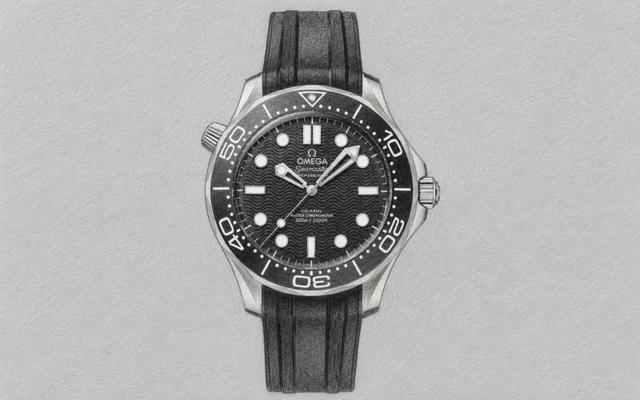
Omega
$5,171
Diver 300M
210.32.42.20.01.003
Black Dial on Rubber Strap

Rolex
$12,375
Sea-Dweller
126600-0002
Oystersteel

TUDOR
$9,669
Black Bay Chrono
M79360N-0024
Flamingo-Blue Turquois Dial on 5-Link Steel Bracelet

TUDOR
$6,513
Pelagos FXD Chrono
M25827KNJN-0001
Black Carbon with Yellow Detail

TUDOR
$8,467
Black Bay Chrono 39mm
M79310N-0001
'Bumblebee' on 3-Link Steel Rivet Bracelet

Rolex
$14,529
Deepsea
136660-0006
Oystersteel Intense Black Dial