Calibrating your experience
Omega · Speedmaster · Moonwatch · Ceramic 'Side of the Moon' · Apollo 8

Speedmaster Dark Side of the Moon
Ref: 311.92.44.30.01.001
Apollo 8 Special Edition

Today’s Market Value
$8,470
(MSRP $10,700)
Editorial Article
The Moon has always had two faces. One is familiar, illuminated in the night sky and observed by humanity for thousands of years. The other remained a mystery until three astronauts traveled farther from Earth than anyone before them. Omega's Speedmaster Apollo 8 collection celebrates that extraordinary journey through some of the most imaginative mechanical chronographs the company has ever produced. Introduced in 2018 to commemorate the fiftieth anniversary of the Apollo 8 mission, the original Dark Side of the Moon Apollo 8 transformed the familiar Speedmaster into a striking black ceramic instrument with vivid yellow accents and a movement decorated to resemble the lunar surface. A substantially revised interpretation followed in 2024, introducing a more sophisticated movement, greater mechanical precision, and a remarkable miniature Saturn V rocket serving as the running-seconds hand. In 2025, a new Grey Side of the Moon Apollo 8 brought the collection closer to the actual appearance of the lunar landscape. Together, these watches represent an unusually compelling intersection of spaceflight history, advanced materials, and mechanical artistry, celebrating not simply humanity's arrival at the Moon, but the extraordinary achievement of seeing its hidden side for the first time. The story begins on December 21, 1968, when Apollo 8 launched from Kennedy Space Center carrying astronauts Frank Borman, Jim Lovell, and William Anders. Their mission was unprecedented: instead of remaining in Earth orbit, they would travel approximately 240,000 miles to the Moon, enter lunar orbit, and return safely home. On December 24, the spacecraft passed behind the Moon, temporarily losing radio contact with Earth as the astronauts became the first humans to witness the lunar far side directly. Shortly before communications disappeared, Lovell told Mission Control, “We'll see you on the other side,” a phrase that would become central to Omega's later commemorative watches. During their ten lunar orbits, the crew also witnessed one of the most extraordinary sights in the history of exploration: Earth rising above the barren lunar horizon. William Anders captured the famous Earthrise photograph, an image that profoundly influenced humanity's understanding of its place in the universe. When Apollo 8 returned safely to Earth on December 27, it had demonstrated that astronauts could travel to the Moon and return, establishing the foundation for the historic lunar landing that would follow seven months later. Every astronaut aboard Apollo 8 carried an Omega Speedmaster, continuing a relationship between the Swiss watchmaker and NASA that had begun earlier in the decade. Originally introduced in 1957 as a motorsport chronograph, the Speedmaster had earned official qualification for crewed space missions in 1965 after successfully completing a demanding series of environmental and mechanical tests. Its robust construction, manually wound movement, and dependable chronograph functions made it particularly suitable for use in environments where ordinary instruments could be compromised. By the time Apollo 8 departed Earth, the Speedmaster had already accompanied astronauts on numerous missions, but the journey around the Moon gave the watch a new historical distinction. The crew became the first humans to travel beyond low Earth orbit, carrying their mechanical chronographs farther into space than any wristwatches had previously ventured. When Omega introduced the Dark Side of the Moon collection in 2013, its black ceramic construction offered a modern interpretation of that spacefaring heritage. Five years later, the Apollo 8 edition brought the historical connection into sharper focus, using the watch's own movement to recreate the extraordinary landscape the astronauts had encountered. The original Apollo 8 Speedmaster appeared in 2018 with a substantial 44.25-millimeter black ceramic case and a dramatic skeletonized dial that revealed portions of the movement beneath. The familiar twisted lugs and asymmetrical case silhouette preserved the recognizable architecture of the Speedmaster Professional, but the dark ceramic construction gave the watch a decidedly contemporary personality. Brilliant yellow accents appeared on the chronograph hands, hour markers, tachymeter details, and strap stitching, creating a striking contrast against the predominantly black exterior. The visual centerpiece, however, was the movement itself. Omega employed laser ablation to engrave intricate representations of the lunar surface onto its blackened bridges and main plate, producing an extraordinary arrangement of miniature craters, ridges, and textured geological formations. Through the openworked dial, the owner could observe a representation of the Moon's near side, while the sapphire exhibition caseback revealed the far side that Apollo 8's astronauts had been the first humans to see directly. Rather than simply printing a lunar image onto the dial, Omega transformed functional movement components into a miniature landscape, creating a watch whose mechanical architecture became an essential part of its historical storytelling. Powering the original edition was Omega's manually wound caliber 1869, a specially decorated interpretation of the venerable caliber 1861 that had served the Speedmaster Professional for decades. Its architecture descended from the caliber 861 introduced in 1968, providing a particularly appropriate mechanical connection to the year of the Apollo 8 mission. The movement retained the traditional cam-operated chronograph mechanism, with a central elapsed-seconds hand, subsidiary minute and hour counters, and running seconds. Approximately 48 hours of power reserve and conventional manual winding preserved the familiar experience associated with historical Moonwatches. The elaborate lunar decoration was achieved without fundamentally changing the movement's established mechanical architecture, demonstrating how modern manufacturing techniques could transform the appearance of a familiar caliber. The watch's black ceramic case offered excellent resistance to ordinary surface scratching, while its substantial dimensions provided space for the intricate skeletonized dial and movement decoration. It was an unusual combination of old and new: a traditional hand-wound chronograph beneath an exterior shaped by advanced ceramic manufacturing and laser engraving. In January 2024, Omega introduced a comprehensively updated Apollo 8 Speedmaster that retained the recognizable black-and-yellow design while substantially advancing its mechanical and decorative sophistication. The new watch preserved the 44.25-millimeter black ceramic case but adopted refined proportions and more elaborate finishing. Its ceramic bezel featured a tachymeter scale rendered in bright white Grand Feu enamel, while the black anodized aluminum dial continued to reveal the movement beneath. The lunar landscape received considerably greater definition through improved laser-engraving techniques, producing more convincing variations in surface texture, depth, and contrast. The most delightful addition appeared in the running-seconds register at nine o'clock, where Omega replaced the conventional hand with a miniature representation of NASA's Saturn V rocket. Manufactured from Grade 5 titanium through an intricate laser-turning process, the tiny three-dimensional spacecraft rotates once every minute, transforming an ordinary timekeeping function into a subtle tribute to the enormous rocket that carried Apollo 8 toward the Moon. It is a wonderfully imaginative detail, small enough to reward close inspection without overwhelming the watch's functional chronograph display. The mechanical transformation was equally important. Omega replaced the earlier caliber 1869 with the manually wound Co-Axial Master Chronometer caliber 3869, a specially decorated evolution of the modern 3861 movement architecture. Incorporating Omega's Co-Axial escapement, silicon balance spring, and advanced resistance to magnetic interference, the movement represented a substantial improvement in contemporary chronometric performance. Master Chronometer certification by the Swiss Federal Institute of Metrology confirmed the completed watch's ability to meet demanding standards of precision and magnetic resistance, including exposure to magnetic fields reaching 15,000 gauss. Its approximately 50-hour power reserve offered a modest improvement over the earlier movement, while the elaborate lunar decoration remained central to the visual experience. The front of the movement continued to represent the Moon as seen from Earth, with the far side visible through the exhibition caseback. The updated watch also introduced a perforated black rubber strap with a contrasting yellow interior, reinforcing its technical appearance while improving everyday practicality. The engraved words recalling Lovell's final transmission before Apollo 8 disappeared behind the Moon preserved the historical connection that had inspired the original edition. Omega revisited the concept again in October 2025 with a Grey Side of the Moon Apollo 8 that adopted a more restrained interpretation of the lunar landscape. Its design drew inspiration from Jim Lovell's observation that the Moon was essentially gray, replacing the dramatic black-and-yellow personality of the earlier editions with a color scheme more closely associated with the actual appearance of the lunar surface. The skeletonized gray dial revealed the familiar laser-engraved terrain beneath, while the exhibition caseback continued the visual journey to the Moon's far side. Powered by the caliber 3869, the new interpretation retained the mechanical sophistication introduced in 2024 while exploring a different relationship between color, texture, and historical accuracy. Its significance lay not in introducing an entirely new complication, but in demonstrating how the same underlying concept could express different aspects of the Apollo 8 story. Where the black editions emphasized the drama of space exploration and the darkness surrounding the lunar landscape, the gray interpretation focused attention on the Moon itself. The progression from the original 2018 watch through the 2024 mechanical revision and the 2025 gray model illustrates Omega's evolving ability to translate historical imagery into increasingly sophisticated material and movement decoration. For collectors, the Apollo 8 Speedmasters occupy a distinctive position within the broader history of the Moonwatch. Their historical inspiration is unusually specific, celebrating the mission that carried human beings around the Moon for the first time rather than the more familiar Apollo 11 lunar landing. The original 2018 edition represents an important early application of elaborate laser-engraved movement decoration within the ceramic Speedmaster family, while the 2024 revision introduced substantial mechanical advancements and the technically remarkable Saturn V seconds hand. The later gray interpretation offers a different visual interpretation of the same historical achievement, expanding the collection's appeal without abandoning its central identity. None of these watches was introduced as a conventional numbered limited edition, and their collector significance rests more convincingly on their distinctive construction, historical connections, and successive technical developments than on assumptions about exceptional scarcity. Original movement components, correct factory straps, preserved ceramic cases, and documented service histories remain important considerations when evaluating individual examples. There are practical compromises as well: the substantial case dimensions will not suit every wrist, the highly detailed skeletonized dials sacrifice some of the immediate legibility associated with a traditional Moonwatch, and ceramic requires care against sharp impacts despite its excellent scratch resistance. Yet these characteristics are inseparable from the collection's appeal. The Apollo 8 Speedmasters transform a historically important mechanical chronograph into a miniature celebration of human exploration, allowing the wearer to appreciate both the engineering within the watch and the extraordinary achievement it commemorates. The Moonwatch earned its reputation by accompanying astronauts into space; the Apollo 8 editions carry that legacy forward by recreating the landscape those astronauts traveled so far to see. In doing so, they remind us that some of humanity's greatest discoveries begin with the simple desire to find out what lies on the other side.
Market Dynamics
Scores from TimeAuthentic's latest AI market valuation of this reference.
Market data is compiled using AI-assisted research and extraction, and may contain inaccuracies.
Technical Data
Case
Shape
Round
Material
Black ceramic case and bezel
Glass
Sapphire crystal, front and display back
Bezel
Fixed black ceramic tachymeter bezel
Case Back
Exhibition sapphire, black ceramic caseback ring
Dimension
44.25mm
Lug Distance
21mm
Lug-to-lug
49.8mm
Thickness
13.8mm
Water Resistance
50m / 5bar / 165ft
Weight
89g
Dial & Hands
Dial Color
Black skeletonized dial
Hour Markers
Applied indices with luminous material
Hands
Blackened hands with luminous inserts
Specificities
Lunar-surface movement decoration; tachymeter scale
Movement & Functions
Movement Type
Mechanical manual-wind
Functions
Hours, minutes, small seconds, chronograph, tachymeter
Caliber
1869Movement Description
19 jewels; 21,600vph; 48-hour power reserve
Winding Type
Manual-wind
Power Reserve
48 hours
Frequency
3 Hz / 21,600 vph
Jewels
19
Hacking Seconds
No
Quickset Date
No
Escapement Type
Swiss lever
Strap
Material
Black perforated leather, yellow rubber lining
Buckle
Ceramic pin buckle
Authentication Guide
Every TimeAuthentic marketplace transaction is designed to route through verification before final release. The watch is reviewed against the exact reference configuration, photographed, documented, and tied to its transaction record so buyers and sellers move through a consistent, trust-forward process.
Watch Passport
The TimeAuthentic Watch Passport is the identity layer attached to qualifying watches that move through authentication, service, vaulting, or purchase flows within the platform. It is designed to connect the watch, its documented handling history, and its supporting evidence into one consistent ownership record.
Continue Exploring
Similar watches

Omega
$8,517
Speedmaster Grey Side of the Moon
311.93.44.51.99.002
Grey Moondust Dial on Alligator Strap with Deployant Clasp

Omega
$7,866
Speedmaster Grey Side of the Moon
311.93.44.51.99.001
Grey Moondust Dial on Alligator Strap with Pinbuckle

TUDOR
$8,233
Pelagos FXD Chrono
25827KNRS-0002
Black Carbon with Pink Detail

Omega
$5,586
Diver 300M
210.30.42.20.01.010
Black Dial on Mesh
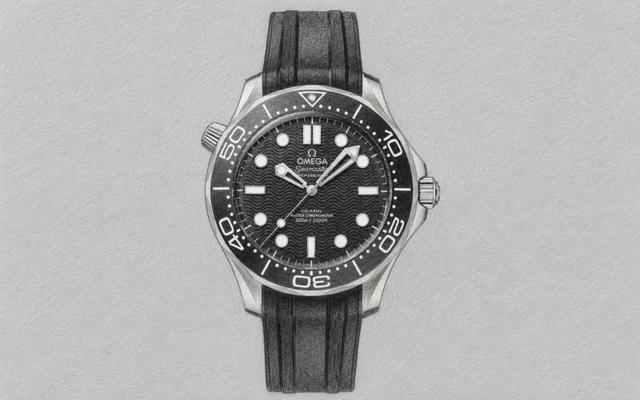
Omega
$5,171
Diver 300M
210.32.42.20.01.003
Black Dial on Rubber Strap

TUDOR
$6,513
Pelagos FXD Chrono
M25827KNJN-0001
Black Carbon with Yellow Detail

TUDOR
$8,467
Black Bay Chrono 39mm
M79310N-0001
'Bumblebee' on 3-Link Steel Rivet Bracelet

TUDOR
$7,791
Black Bay Ceramic
M7941A1ACNU-0001
Black Ceramic on 3-Link Full Ceramic Bracelet

BREITLING
$7,498
Navitimer B01 Chronograph 46
AB0137211C1P1
Blue Dial Alligator Leather

BREITLING
$7,164
Navitimer B01 Chronograph 46
AB0137211C1A1
Blue Dial Stainless Steel Bracelet