Calibrating your experience
Omega · Speedmaster · Moonwatch · Calibres 1861/1863 (1997-2021)

Speedmaster Standard Moonwatch Professional
Ref: 3570.50.00
Steel Bracelet, Black Dial
Catalog details for this watch are still being finalized.
Also known as “Moonwatch; Speedmaster Professional”
Today’s Market Value
$4,572
(MSRP $5,410)
Editorial Article
For nearly a quarter of a century, the Speedmaster Professional you could walk into an Omega dealer and buy looked much the same. It had a matte black dial, white baton hands, three recessed registers, and a black aluminum tachymeter bezel. The asymmetrical steel case curled into twisted lugs on either side, and its right flank sheltered the crown and pushers. There was no date window to interrupt the dial, and every morning or two you had to wind it. For many collectors, this was the watch that made the Moonwatch feel as much like an everyday companion as a piece of space history. The Speedmaster began in 1957 as a sporting chronograph, with the tachymeter moved out to the bezel to give the dial more room. NASA qualified the Speedmaster for crewed spaceflight in 1965, and Buzz Aldrin wore a calibre 321-powered Professional on the lunar surface in 1969. By then, Omega had already introduced the calibre 861, which used a cam to control the chronograph in place of the 321’s column wheel. The rhodium-plated calibre 1861 that arrived in the late 1990s refined that design while preserving the hand-wound architecture and the familiar feel of starting, stopping, and resetting the timer. The traditional version paired that movement with a domed Hesalite crystal and a solid steel back. Hesalite is Omega’s name for its acrylic crystal, and it gives the dial a soft edge and a little distortion when viewed from the side. It picks up scratches more readily than sapphire, though light marks can often be polished out. The earliest examples also capture the change from tritium to Super-LumiNova. Original tritium can turn a warm cream as it ages, while the later luminous material is the more practical choice if you regularly check the time in the dark. The early 2000s brought another way to enjoy the same watch. The version collectors call the “sapphire sandwich” put scratch-resistant sapphire over the dial and another sapphire crystal over the movement. The display back showed off the calibre 1863, a more decoratively finished sibling of the 1861 with a metal chronograph brake in place of the latter’s synthetic one. The two watches look close from across a room, but sapphire can show a pale ring around the dial at certain angles. Turn it over, though, and you can watch the chronograph levers move as you work the pushers. Omega refreshed the range in 2014 with changes that are easiest to spot away from the dial. The steel bracelet switched from pins to screws for sizing, and the watch came in a large presentation box with a NATO-style strap, a long astronaut-style strap, and a strap-changing tool. Omega offered both crystal configurations on the steel bracelet or on black leather. The bracelet brings out the alternating brushed and polished surfaces of the case, while leather softens the look and makes the watch easy to wear with a jacket. The movements have their period quirks. With roughly 48 hours of power reserve, the watch may stop if it spends a weekend off the wrist. Pulling the crown leaves the running seconds going, which makes precise synchronization less convenient. At 50 metres, the factory water-resistance rating is modest for a steel sports watch. Yet the dial is exceptionally easy to read for a chronograph, and the two pushers make a satisfying way to time anything from a parking meter to a long phone call. Omega moved the standard Moonwatch to the Co-Axial calibre 3861 in 2021, closing a chapter that stretched back through the 1861 to the 861 of the late 1960s. That continuity is what gives these watches their place in chronograph history. For decades, Omega kept a manually wound, cam-operated stopwatch at the center of its best-known collection and let owners choose how much of the mechanism they wanted to see. The fact that the basic layout still feels natural to use says as much about the original design as it does about Omega’s restraint. A collector can approach this era from several directions. An early Hesalite example with original tritium has a character that develops with age. A sapphire model lets the movement share the spotlight with the dial. A later example with its original bracelet, straps, and presentation box captures how Omega sold the Moonwatch at the close of the era. Each offers a slightly different reason to linger over the watch, and all deliver the simple pleasure that kept it relevant for so long. Wind the crown, press the upper pusher, and watch the long white hand set off around the dial.
Market Dynamics
Scores from TimeAuthentic's latest AI market valuation of this reference.
Market data is compiled using AI-assisted research and extraction, and may contain inaccuracies.
Technical Data
Case
Shape
Round
Material
Stainless-steel case
Glass
Hesalite
Bezel
Black tachymeter bezel, aluminum
Case Back
Solid stainless-steel screw-down caseback
Dimension
42mm
Lug Distance
20mm
Lug-to-lug
48.2mm
Thickness
13.8mm
Water Resistance
50m / 5bar / 165ft
Weight
150g
Dial & Hands
Dial Color
Black
Hour Markers
Applied baton markers with luminous fill
Hands
White-finished hands with luminous fill
Movement & Functions
Movement Type
Mechanical, manual-wind
Functions
Hours, minutes, small seconds, chronograph
Caliber
1861Movement Description
Rhodium-plated, cam-actuated chronograph; 18 jewels
Winding Type
Manual-wind
Power Reserve
48 hours
Frequency
3 Hz / 21,600 vph
Jewels
18
Hacking Seconds
No
Quickset Date
No
Escapement Type
Swiss lever
Hairspring Type
Flat Nivarox alloy hairspring
Strap
Material
Stainless-steel bracelet
Buckle
Stainless-steel foldover clasp
Authentication Guide
Every TimeAuthentic marketplace transaction is designed to route through verification before final release. The watch is reviewed against the exact reference configuration, photographed, documented, and tied to its transaction record so buyers and sellers move through a consistent, trust-forward process.
Watch Passport
The TimeAuthentic Watch Passport is the identity layer attached to qualifying watches that move through authentication, service, vaulting, or purchase flows within the platform. It is designed to connect the watch, its documented handling history, and its supporting evidence into one consistent ownership record.
Continue Exploring
Similar watches
Omega
$4,860
Speedmaster Standard Moonwatch Professional
311.33.42.30.01.001
Black Leather Strap
Omega
$5,238
Speedmaster Standard Moonwatch Professional
3573.50.00
Steel Bracelet, Sapphire Sandwich
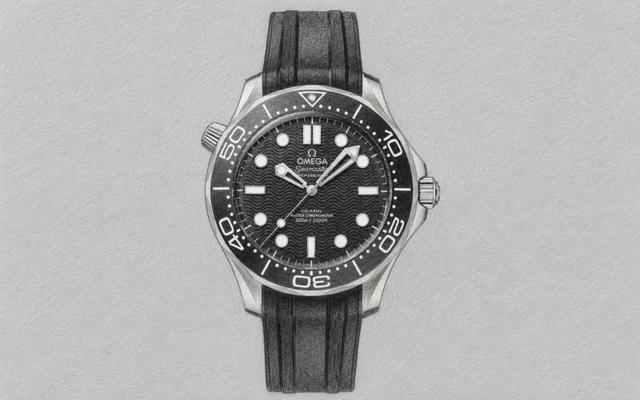
Omega
$5,171
Diver 300M
210.32.42.20.01.003
Black Dial on Rubber Strap

Omega
$5,586
Diver 300M
210.30.42.20.01.010
Black Dial on Mesh

TUDOR
$4,659
Black Bay Chrono Classic (2021-2025)
M79360N-0002
Opaline 'Panda' Dial on 3-Link Steel Rivet Bracelet

TUDOR
$4,459
Black Bay Chrono Classic (2021-2025)
M79360N-0008
Opaline 'Panda' Dial on Black Fabric Strap

TUDOR
$4,609
Pelagos FXD Chrono
M25827KN-0001
Black Carbon with Red Detail
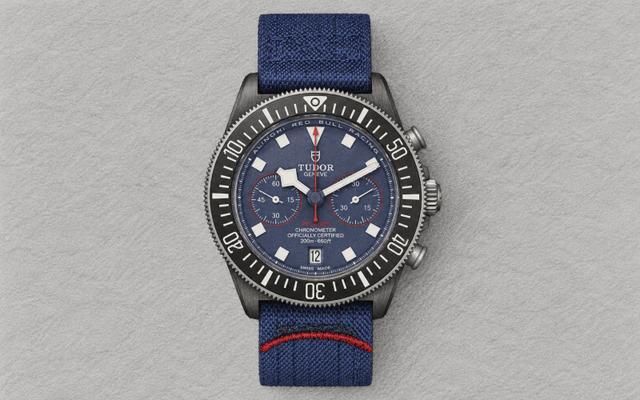
TUDOR
$3,694
Pelagos FXD
M25807KN-0001
Chrono Alinghi Red Bull Racing Chronograph

TUDOR
$6,013
Northflag
M9140G1A0U-0001
Current gen on Integrated Steel Bracelet

TUDOR
$3,504
Northflag
M91210N-0002
First Gen on Black Leather Strap