Calibrating your experience
TUDOR · Northflag · First Gen (2015-2021)

Northflag
Ref: M91210N-0002
First Gen on Black Leather Strap

Today’s Market Value
$3,504
(MSRP $3,725)
Editorial Article
Some watches become important because of what they accomplish. Others become memorable because they refuse to look like anything else. The Tudor North Flag managed to do both. Unveiled at Baselworld in March 2015, it arrived at a pivotal moment in Tudor's modern history, introducing the company's first manufacture movement within a watch whose design was unlike anything else in its contemporary catalog. With its angular stainless steel case, integrated bracelet, matte black dial, vivid yellow accents, and unusual power-reserve display, the North Flag seemed determined to challenge expectations. It was neither a traditional diving instrument nor a nostalgic recreation of a celebrated vintage reference. Instead, it represented a distinctly modern interpretation of the expedition watch, combining technical ambition with an industrial aesthetic inspired by an overlooked chapter of Tudor's past. Offered as reference 91210N on either a stainless steel bracelet or a fitted leather strap, the North Flag remained in production until 2021. Its comparatively brief existence left behind a fascinating legacy, particularly among collectors who appreciate watches that represent meaningful turning points in a manufacturer's history. The North Flag's origins reach back to one of the most important expeditions associated with Tudor. Between 1952 and 1954, members of the British North Greenland Expedition carried Tudor Oyster Prince watches during an ambitious scientific mission into the Arctic. Operating in extreme cold and difficult environmental conditions, the expedition's participants relied upon their mechanical watches as practical instruments supporting their scientific work. Their experiences helped establish Tudor's reputation for robust, dependable timepieces capable of functioning far beyond ordinary daily circumstances. More than six decades later, the North Flag drew upon this heritage, adopting a name that evoked the exploration of remote northern landscapes and the spirit of scientific discovery. Unlike many historically inspired watches, however, it made little attempt to reproduce the appearance of its ancestors. Tudor instead interpreted the expedition's underlying principles through contemporary materials, modern mechanical engineering, and a design intended to communicate functional precision. The result was a watch connected to the company's history through purpose and philosophy rather than superficial resemblance. Although the North Flag's adventurous identity originated in the 1950s, its design owed considerably more to Tudor's experiments during the 1970s. The Ranger II, introduced in 1973, departed from the conventional appearance of earlier Oyster Prince Rangers through its angular case and integrated-bracelet construction. Such designs reflected an important transformation in Swiss watchmaking, as manufacturers increasingly explored sculptural case shapes and bracelets conceived as extensions of the watch itself. The North Flag revisited this unconventional lineage with a 40-millimeter stainless steel case distinguished by broad surfaces, sharply defined edges, and a deliberately architectural silhouette. Its integrated bracelet flowed naturally from the case, creating a unified appearance that emphasized the watch's contemporary character. Rather than competing directly with the historical Submariner designs celebrated by the Black Bay collection, the North Flag embraced a less familiar part of Tudor's design heritage. This gave it a particularly independent identity, demonstrating that the company's archives contained considerably more than the professional diving watches for which it had become best known. The North Flag's visual character was defined by a striking contrast between restraint and technical complexity. Its matte black dial featured large applied luminous hour markers, broad white luminous hands, and a bright yellow seconds hand that introduced an unmistakable flash of color. Yellow five-minute markings around the outer dial reinforced the sporting appearance, while an instantaneous date display at three o'clock provided everyday practicality. At nine o'clock, a rotating-disc power-reserve indicator displayed the energy remaining within the movement, introducing an unusual complication to a Tudor sports watch. The display's distinctive arrangement added visual interest without abandoning the watch's emphasis on functional information. Surrounding the dial was a fixed, two-part bezel combining a circular satin-finished stainless steel upper surface with a matte black ceramic section visible around its side. This layered construction was particularly distinctive, creating a subtle architectural separation between the bezel and the main body of the case. Together, the various elements produced a watch that looked less like a traditional field instrument and more like a sophisticated piece of contemporary scientific equipment. The case and bracelet construction reinforced this technical personality. Manufactured from 316L stainless steel, the North Flag featured predominantly satin-finished surfaces that minimized decorative reflections and emphasized its robust, utilitarian character. Its substantial case measured approximately 13.3 millimeters thick, giving the watch a pronounced presence despite its relatively moderate diameter. A sapphire crystal protected the dial, while a screw-down winding crown and 100-meter water resistance provided the durability expected of a versatile modern sports watch. Tudor offered two distinct configurations: an integrated stainless steel bracelet incorporating contrasting finishes on its links, and a fitted matte black leather strap with yellow stitching and matching yellow lining. Both employed folding clasps and were designed specifically around the case's unusual geometry. The leather version emphasized the watch's adventurous personality, while the steel bracelet reinforced its relationship with the integrated sports watches of the 1970s. Neither was a conventional interchangeable-strap arrangement, a characteristic that contributed to the North Flag's distinctive appearance but also limited the flexibility enjoyed by watches with traditional lugs. The North Flag's greatest historical achievement was found beneath its dial. Its manufacture caliber MT5621 represented a fundamental change in Tudor's approach to mechanical watchmaking, introducing a movement developed specifically for the brand rather than relying upon the established third-party calibers that had powered many earlier Tudor watches. The automatic movement incorporated a variable-inertia balance, a silicon balance spring, and a robust balance bridge secured at both ends, reflecting an emphasis on precision and resistance to everyday mechanical stresses. Operating at 28,800 vibrations per hour, it provided approximately 70 hours of power reserve and earned certification from the Swiss Official Chronometer Testing Institute. Its complications included an instantaneous date mechanism and the distinctive power-reserve display, both integrated into a movement designed around Tudor's requirements. Equally significant was the sapphire exhibition caseback, a first for Tudor, which allowed owners to observe the movement and its openworked automatic winding rotor. The finishing remained relatively understated, favoring functional engineering over elaborate ornamentation, but the significance of the display was unmistakable. After decades of building its reputation around dependable watches powered by externally sourced movements, Tudor was ready to make its own mechanical architecture a central part of its identity. The North Flag arrived during an especially transformative period for Tudor. The Heritage Black Bay had appeared in 2012, helping establish a renewed appreciation for the brand's historical diving watches, while the Pelagos demonstrated its ability to produce thoroughly modern professional instruments. The North Flag occupied a different position, sharing the Pelagos's emphasis on technical development while embracing a far more unconventional design. Its manufacture movement helped establish a foundation for the increasingly sophisticated calibers that would subsequently appear throughout Tudor's collection, making it an important milestone even though the watch itself never achieved the broad popularity of the Black Bay. Its unusual appearance also divided enthusiasts. Some admired the purposeful case architecture, vivid yellow accents, and distinctive power-reserve indicator, while others found its proportions substantial and its design less versatile than more traditional sports watches. The integrated bracelet further limited conventional strap choices, and its relatively thick case could feel imposing on smaller wrists. Nevertheless, these characteristics gave the North Flag a personality entirely its own. When production ended in 2021, Tudor retired one of its most recognizable modern experiments, leaving collectors with a watch whose mechanical importance had arguably exceeded its commercial prominence. For collectors, the North Flag represents an unusually compelling combination of historical significance, technical innovation, and independent design. Its place as the first Tudor model to introduce the MT5621 manufacture movement provides a clear connection to one of the company's most consequential modern developments, while its exhibition caseback and unconventional power-reserve display distinguish it from the more familiar watches that followed. The steel-bracelet and leather-strap configurations offer different interpretations of the same industrial design, with each preserving factory-original details that are central to the watch's identity. Correct dial components, the distinctive two-part bezel, original bracelet or fitted strap, and accompanying documentation are particularly worthwhile considerations when evaluating individual examples. Its relatively short production period adds a defined historical context without requiring claims of exceptional rarity or inevitable future appreciation. More broadly, the North Flag occupies an important place in the evolution of modern Swiss sports watches, demonstrating that integrated-bracelet construction and contemporary design could coexist with genuine mechanical ambition. Its greatest appeal may ultimately lie in its refusal to conform. At a time when Tudor was successfully rediscovering its past, the North Flag proved that the company was equally capable of imagining something new. It remains a reminder that the most interesting journeys in watchmaking are not always undertaken along familiar paths.
Market Dynamics
Scores from TimeAuthentic's latest AI market valuation of this reference.
Market data is compiled using AI-assisted research and extraction, and may contain inaccuracies.
Technical Data
Case
Shape
Round
Material
316L stainless steel, satin-finished
Glass
Scratch-resistant sapphire crystal
Bezel
Fixed steel upper bezel, matte-black ceramic insert
Case Back
Display back, screw-fastened, steel and sapphire
Dimension
40mm
Lug Distance
20mm
Lug-to-lug
50mm
Thickness
13.4mm
Water Resistance
100m / 10bar / 330ft
Case Specificities
Angular case, screw-down crown, double waterproofness system
Weight
96g
Dial & Hands
Dial Color
Matte black
Hour Markers
Applied white indices, luminous; Arabic 6 and 12
Hands
White luminous hour and minute; yellow seconds
Specificities
Date at 3; disc power-reserve indicator
Movement & Functions
Movement Type
Self-winding mechanical automatic
Functions
Hours, minutes, seconds, date, power-reserve indicator
Caliber
MT5621Movement Description
COSC-certified; silicon balance spring; 28 jewels; 70-hour reserve
Winding Type
Bidirectional automatic
Power Reserve
70 hours
Frequency
4 Hz / 28,800 vph
Jewels
28
Hacking Seconds
Yes
Quickset Date
Yes — direct crown-operated quickset
Escapement Type
Swiss lever
Hairspring Type
Nonmagnetic silicon, flat geometry
Certification
COSC-certified Swiss Chronometer
Strap
Material
Black leather, yellow stitching and lining
Buckle
TUDOR folding clasp with safety catch, steel
Authentication Guide
Every TimeAuthentic marketplace transaction is designed to route through verification before final release. The watch is reviewed against the exact reference configuration, photographed, documented, and tied to its transaction record so buyers and sellers move through a consistent, trust-forward process.
Watch Passport
The TimeAuthentic Watch Passport is the identity layer attached to qualifying watches that move through authentication, service, vaulting, or purchase flows within the platform. It is designed to connect the watch, its documented handling history, and its supporting evidence into one consistent ownership record.
Continue Exploring
Similar watches

TUDOR
$3,307
Northflag
M91210N-0001
First Gen on Integrated Steel Bracelet

TUDOR
$3,457
Black Bay GMT
M79830RB-0012
Opaline Dial 'Pepsi' Blue and Red Bezel on Black Fabric Strap

TUDOR
$3,557
Ranger 39mm
M79950-0008
Beige 'Dune' Dial on Steel Bracelet
TUDOR
$3,424
Black Bay One - 39mm
M79660-0002
Blue Sunray Dial on 5-Link Steel Bracelet
TUDOR
$3,594
Ranger 39mm
M79950-0011
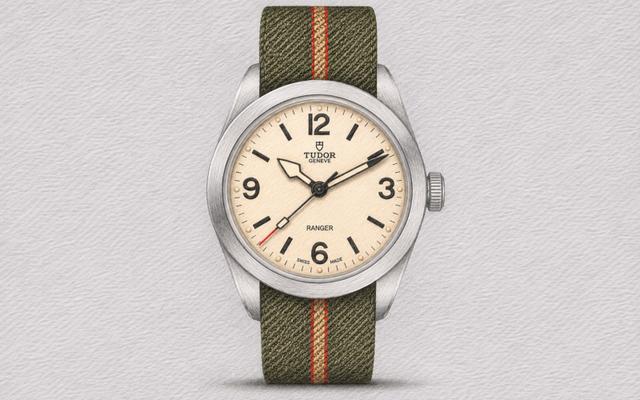
Beige 'Dune' Dial on Fabric Strap

TUDOR
$3,270
Royal 41mm
M28600-0011
Salmon Diamond Dial

TUDOR
$3,257
1926 - 41mm
M91651-0009
White Embossed Dial, Rose Gold Two-Tone

TUDOR
$3,257
Royal 40mm
M2840D1A0-0001
Black Baton Dial with Gold Detail

TUDOR
$3,006
1926 - 39mm
M91551-0002
Silver Diamond-Set Dial, Rose Gold Two-Tone Bracelet

TUDOR
$3,457
Pelagos FXD
M25707KN-0001
Alinghi Red Bull Racing, Time-Only