Calibrating your experience
TUDOR · Black Bay · Black Bay Chrono · Original Chrono (2017-2021)

Black Bay Chrono Heritage
Ref: M79350-0002
Brown Leather Strap 2017-2018
Catalog details for this watch are still being finalized.
Also known as “Black Bay Chrono Heritage”

Today’s Market Value
$3,282
(MSRP $5,050)
Editorial Article
What happens when a watchmaker combines the rugged personality of a professional diving watch with the mechanical sophistication of a racing chronograph? In 2017, Tudor answered that question with the Black Bay Chrono, one of the most intriguing additions to its rapidly expanding modern collection. Introduced at Baselworld, the new chronograph brought together two seemingly unrelated chapters of the company's history: the diving instruments that had established Tudor's reputation for dependability and the boldly styled motorsport chronographs that emerged during the 1970s. The result was a substantial 41-millimeter sports watch featuring distinctive Snowflake hands, a fixed tachymeter bezel, and an advanced automatic chronograph movement developed through a collaboration with Breitling. Its unconventional appearance immediately divided opinion, but it also demonstrated Tudor's willingness to explore new directions rather than simply reproduce familiar historical designs. Subsequent steel-and-gold configurations, an unusual all-black edition, and a significant aesthetic refinement in 2021 revealed how much potential existed within the original concept. Together, these early watches established the identity of a collection that would become an increasingly important part of Tudor's modern catalog. The Black Bay Chrono's historical foundations begin in 1970, when Tudor introduced its first chronograph, the Oysterdate reference 7031. With its distinctive pentagonal hour markers, subsequently nicknamed “Homeplate” by collectors, the watch established an immediately recognizable sporting identity. Its robust Oyster case, prominent chronograph pushers, and unusual dial design reflected the rapidly developing relationship between mechanical wristwatches and international motorsport. The following years brought the celebrated Monte Carlo chronographs, whose combinations of blue, gray, and orange demonstrated Tudor's willingness to embrace colors and design elements that were remarkably adventurous for their time. Later generations introduced automatic chronograph movements and increasingly refined construction, establishing a lineage that continued through the Prince chronographs of the 1990s. Running alongside these developments was Tudor's equally important diving-watch history, beginning with the Oyster Prince Submariner in 1954. The Snowflake hands introduced in 1969 became a defining symbol of that professional heritage, eventually providing the visual connection between Tudor's early diving instruments and the modern Black Bay collection. The Black Bay itself had arrived in 2012, introducing a contemporary interpretation of Tudor's historical Submariners that proved enormously successful among enthusiasts. Its domed crystal, prominent winding crown, angular hands, and robust case construction established a distinctive visual identity, while subsequent additions demonstrated how successfully the design could accommodate different materials, complications, and proportions. The Black Bay Chrono represented a more substantial departure than a simple change of color or case size. Its fixed tachymeter bezel replaced the rotating diving bezel, while screw-down chronograph pushers introduced a mechanical function associated more closely with motorsport than underwater exploration. Nevertheless, Tudor retained the familiar Black Bay case architecture, broad Snowflake hands, and impressive 200-meter water resistance. This combination was unconventional, even slightly contradictory, but entirely deliberate. The watch was intended to celebrate two established areas of Tudor's expertise rather than conform to the conventional appearance of a dedicated racing chronograph. Its introduction also coincided with the company's growing technical independence, making the mechanical movement beneath the dial just as important as the historical design elements surrounding it. The original stainless steel Black Bay Chrono, reference 79350, established the collection's distinctive appearance. Its 41-millimeter case featured polished and satin-finished surfaces, broad lugs, and a fixed stainless steel bezel engraved with a tachymeter scale calibrated in units per hour. The matte black dial incorporated two recessed chronograph counters, with running seconds positioned at nine o'clock and a 45-minute elapsed-time counter at three. A date window at six o'clock introduced everyday practicality while preserving the symmetry of the two-register arrangement. Large luminous hour markers and Tudor's characteristic Snowflake hands provided a strong connection to the company's diving watches, while the screw-down chronograph pushers recalled the construction of earlier Oysterdate chronographs. At approximately 14.9 millimeters thick, the watch possessed a substantial presence that emphasized its mechanical complexity. Tudor offered the model on a rivet-style stainless steel bracelet, a leather strap with a removable protective Bund-style backing, or a woven fabric strap. Each configuration gave the watch a different personality, ranging from a traditional sports chronograph to something more closely associated with vintage military and expedition equipment. The collection expanded significantly in 2019 with the introduction of the Black Bay Chrono S&G, reference 79363N. Combining stainless steel with yellow gold, the new models introduced a considerably warmer and more luxurious interpretation of the original design. The engraved steel tachymeter bezel gave way to a black anodized aluminum insert surrounded by a yellow-gold bezel, while gold-colored hands, hour markers, and crown details created a distinctive contrast against the darker dial treatments. The collection included black and champagne-toned dial arrangements, with contrasting chronograph counters reinforcing the sporting character of the design. Steel-and-gold bracelets incorporated gold-capped center links, while leather and fabric strap configurations offered more restrained alternatives. The revised case construction also reduced the watch's thickness slightly, making it more comfortable without dramatically altering its substantial appearance. These changes demonstrated how successfully the original Black Bay Chrono architecture could accommodate different materials and visual personalities. The S&G was not merely a decorative variation; it established a more refined direction for the collection while retaining the same robust mechanical foundation and functional capabilities. Later that year, Tudor introduced one of its most unusual modern chronographs: the Black Bay Chrono Dark, reference 79360DK. Developed to celebrate the company's partnership with New Zealand's national rugby team, the All Blacks, the watch featured a black PVD-coated stainless steel case, bracelet, and tachymeter bezel inspired by the team's famous uniform. Its nearly monochromatic appearance contrasted sharply with the polished steel and gold configurations already available, giving the chronograph an intentionally stealthy personality. More importantly, the Dark introduced an uncommon approach to limited production within Tudor's modern catalog. The initial production quantity corresponded to the 1,181 players who had represented the All Blacks since the team's founding in 1884, with Tudor intending to produce an additional numbered watch whenever another player joined the team's historical roster. This unusual arrangement connected the production series directly to the continuing history of a sporting institution rather than establishing an arbitrary numerical limit. Each watch carried an individual number on its caseback, creating a permanent association with the collaboration. The Dark consequently became a particularly distinctive expression of Tudor's relationship with professional sport, combining the established Black Bay Chrono movement and construction with an unusual approach to commemorative watchmaking. The mechanical foundation shared by these watches was Tudor's manufacture caliber MT5813, an automatic chronograph movement developed through an important technical collaboration with Breitling. Based on Breitling's respected B01 chronograph architecture, the movement incorporated Tudor-specific modifications, including a silicon balance spring and a variable-inertia balance. Its column-wheel mechanism controlled the chronograph's operation, while a vertical clutch provided smooth engagement of the central chronograph seconds hand. This sophisticated construction distinguished the MT5813 from simpler chronograph movements and demonstrated Tudor's growing mechanical ambitions. The caliber offered approximately 70 hours of power reserve, automatic winding, an instantaneous date display, and a 45-minute chronograph counter. Certification by the Swiss Official Chronometer Testing Institute confirmed its precision credentials, while the substantial case construction maintained the 200-meter water resistance expected of the Black Bay family. The collaboration was especially significant because it demonstrated how established Swiss manufacturers could share technical expertise while preserving their individual identities. Rather than developing an entirely new chronograph architecture independently, Tudor adapted a proven and technically accomplished movement to its own requirements, creating a mechanical foundation that would continue serving the Black Bay Chrono through subsequent generations. In April 2021, Tudor introduced a meaningful refinement of the collection through new panda and reverse-panda dial configurations. The familiar matte black dial gave way to sharply contrasting chronograph counters, with one version combining an opaline dial and black registers while the other reversed the arrangement. Both adopted a black anodized aluminum tachymeter insert, creating a stronger visual connection to traditional racing chronographs than the original steel-bezel design. The revised case measured approximately 14.4 millimeters thick, continuing the gradual refinement of the proportions introduced with the 2019 models. Although the movement and fundamental architecture remained unchanged, these aesthetic revisions substantially altered the watch's character, establishing the appearance that would become closely associated with the modern Black Bay Chrono. For collectors, the early steel-bezel models, the warmer S&G configurations, the numbered Chrono Dark, and the contrasting-dial watches introduced in 2021 document a fascinating period of experimentation and gradual refinement. Each represents a recognizable stage in Tudor's effort to establish a distinctive chronograph identity within its broader sports-watch collection. Original dials, correct bezels, factory bracelets or straps, and accompanying documentation remain important considerations when evaluating individual examples, particularly where unusual materials or numbered production are involved. The early Black Bay Chrono ultimately represents one of Tudor's more ambitious modern experiments, bringing together historical design elements and advanced mechanical engineering in a combination that was never intended to satisfy every enthusiast. Its substantial case thickness can make it less comfortable on smaller wrists, while the broad Snowflake hour hand occasionally obscures portions of the chronograph counters. The screw-down pushers also require an additional step before the timing functions can be operated, a practical compromise associated with the watch's robust construction. Yet these characteristics are part of what makes the collection distinctive. It does not attempt to become a conventional racing chronograph or disguise its relationship with Tudor's professional diving watches. Instead, it embraces both traditions, creating a mechanically sophisticated instrument whose identity is rooted in the company's willingness to experiment. The successive developments between 2017 and 2021 demonstrate how Tudor gradually refined that original idea through changes in materials, colors, proportions, and finishing without abandoning its underlying mechanical architecture. For collectors interested in the evolution of Tudor's contemporary catalog, the development of modern automatic chronographs, or the occasionally unconventional relationship between watches and motorsport, these early models offer a particularly engaging story. They capture a moment when Tudor was discovering that its historical identity could support far more than faithful recreations of the past—and that some of its most interesting watches would emerge from bringing together ideas that, at first glance, seemed unlikely to belong on the same wrist.
Market Dynamics
Scores from TimeAuthentic's latest AI market valuation of this reference.
Market data is compiled using AI-assisted research and extraction, and may contain inaccuracies.
Technical Data
Case
Shape
Round
Material
Stainless steel case with polished and satin-brushed finishes
Glass
Domed sapphire crystal
Bezel
Fixed stainless steel bezel with tachymeter
Case Back
Solid screw-down caseback, stainless steel
Dimension
41mm
Lug Distance
22mm
Lug-to-lug
49.9mm
Thickness
14.4mm
Water Resistance
200m / 660ft
Case Specificities
Screw-down crown and pushers; crown guards
Weight
112g
Dial & Hands
Dial Color
Black dial and subdials
Hour Markers
Luminous applied indices
Hands
Snowflake hour hand; lume-filled steel hands
Movement & Functions
Movement Type
Automatic and Manual Wind Chronograph
Functions
Chronograph, small seconds
Caliber
MT5813Movement Description
COSC chronometer; column wheel, vertical clutch, 70-hour reserve
Winding Type
Bidirectional automatic
Power Reserve
70 hours
Frequency
4 Hz / 28,800 vph
Jewels
41
Hacking Seconds
Yes
Quickset Date
Yes — direct quickset
Escapement Type
Swiss lever
Hairspring Type
Silicon, flat geometry
Certification
COSC (uncased); Tudor −2/+4 s/day (cased)
Strap
Material
Brown leather strap; additional fabric strap
Buckle
Folding clasp with safety catch, stainless steel
Authentication Guide
Every TimeAuthentic marketplace transaction is designed to route through verification before final release. The watch is reviewed against the exact reference configuration, photographed, documented, and tied to its transaction record so buyers and sellers move through a consistent, trust-forward process.
Watch Passport
The TimeAuthentic Watch Passport is the identity layer attached to qualifying watches that move through authentication, service, vaulting, or purchase flows within the platform. It is designed to connect the watch, its documented handling history, and its supporting evidence into one consistent ownership record.
Continue Exploring
Similar watches

TUDOR
$3,357
Black Bay Chrono Original (2017-2021)
M79350-0005
Brown Leather Strap 2019-2021

TUDOR
$3,106
Black Bay Chrono Heritage
M79350-0003
Blue Fabric Strap 2019-2021
TUDOR
$3,694
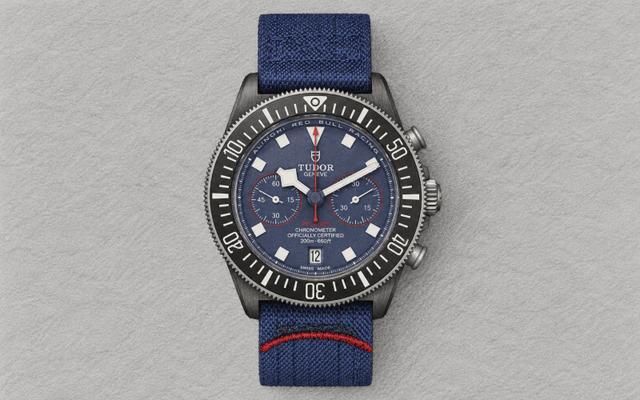
Pelagos FXD
M25807KN-0001
Chrono Alinghi Red Bull Racing Chronograph

TUDOR
$3,307
Northflag
M91210N-0001
First Gen on Integrated Steel Bracelet

TUDOR
$3,270
Royal 41mm
M28600-0011
Salmon Diamond Dial

TUDOR
$3,257
1926 - 41mm
M91651-0009
White Embossed Dial, Rose Gold Two-Tone

TUDOR
$3,257
Royal 40mm
M2840D1A0-0001
Black Baton Dial with Gold Detail

TUDOR
$3,504
Northflag
M91210N-0002
First Gen on Black Leather Strap

TUDOR
$3,557
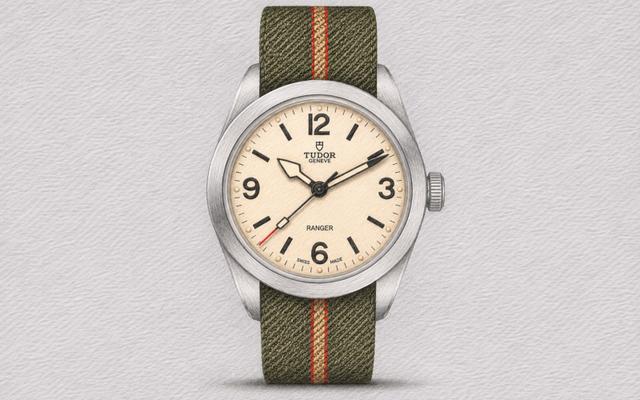
Ranger 39mm
M79950-0008
Beige 'Dune' Dial on Steel Bracelet
TUDOR
$3,594
Ranger 39mm
M79950-0011
Beige 'Dune' Dial on Fabric Strap