Calibrating your experience
TUDOR · Black Bay · Black Bay GMT · Opaline on Steel

Black Bay GMT
Ref: M79830RB-0012
Opaline Dial 'Pepsi' Blue and Red Bezel on Black Fabric Strap
Also known as “Opaline Pepsi”, “Tudor Pepsi”

Today’s Market Value
$3,457
(MSRP $4,925)
Editorial Article
There is something undeniably romantic about a watch that knows where home is, even when its owner is halfway around the world. When Tudor introduced the Black Bay GMT at Baselworld in March 2018, it brought one of mechanical watchmaking's most practical complications into a collection celebrated primarily for its diving heritage. With its distinctive burgundy-and-blue bezel, bold Snowflake hands, and substantial stainless steel case, the new watch combined the visual character of Tudor's historical Submariners with the functionality of a dedicated travel instrument. Its resemblance to the legendary Rolex GMT-Master was immediately apparent, but the Black Bay GMT approached the familiar concept with a personality of its own. Rather than emphasizing polished surfaces and contemporary luxury, Tudor embraced muted colors, traditional materials, and a purposeful design that recalled the golden age of international travel. The collection subsequently expanded to include elegant steel-and-yellow-gold configurations and a striking opaline dial, demonstrating that the same mechanical foundation could support very different interpretations of the classic travel watch. More than simply a Black Bay with an additional hand, the GMT represented an important expansion of Tudor's modern identity. The origins of the Black Bay GMT are closely connected to two important developments in twentieth-century watchmaking: the emergence of professional diving instruments and the rapid expansion of commercial aviation. Tudor introduced its first Submariner, reference 7922, in 1954, establishing a reputation for reliable watches designed to perform under demanding conditions. Throughout the following decades, the company's diving watches developed increasingly recognizable features, including prominent winding crowns, robust rotating bezels, and the distinctive Snowflake hands that appeared in 1969. Meanwhile, the rise of intercontinental air travel created a different challenge for mechanical watchmakers. Pilots and frequent travelers needed a convenient way to distinguish local time from the time at their point of departure. Rolex addressed this demand with the GMT-Master in 1955, establishing the red-and-blue 24-hour bezel as one of the most recognizable design elements in modern horology. Tudor's eventual interpretation drew upon this shared historical background while combining it with the independent visual identity established by its professional diving watches. The result was not a reproduction of an obscure vintage Tudor GMT, but a new model built around familiar elements of the company's heritage. The Black Bay collection itself had arrived in 2012, when Tudor reintroduced the aesthetic character of its historical Submariners through a contemporary mechanical diving watch. The combination of domed crystals, prominent crowns, angular hands, and vintage-inspired details proved enormously successful, establishing the foundation for a rapidly expanding family. By 2018, Tudor had begun introducing its own manufacture movements across several collections, creating opportunities to incorporate complications that would previously have required substantial modifications to externally sourced calibers. The Black Bay GMT emerged from this technical evolution, using the familiar 41-millimeter Black Bay architecture as the foundation for a sophisticated travel watch. Its introduction was particularly memorable because Rolex simultaneously unveiled a new stainless steel GMT-Master II with a red-and-blue bezel, inviting immediate comparisons between the two companies. Yet Tudor's approach was deliberately different. The Black Bay GMT featured an anodized aluminum bezel insert rather than ceramic, more subdued colors, and a distinctly historical appearance. These choices gave the watch a warmer, less contemporary character, connecting the romance of international travel with the rugged personality of Tudor's professional instruments. The original stainless steel Black Bay GMT, reference 79830RB, established the collection's recognizable appearance. Its matte black dial featured large luminous hour markers, broad Snowflake hands, and a date window at three o'clock. A slender red 24-hour hand, distinguished by its angular Snowflake tip, completed one rotation each day, allowing the wearer to track a reference time independently of the conventional twelve-hour display. Surrounding the domed sapphire crystal was a bidirectional rotating bezel with a matte anodized aluminum insert divided between burgundy and blue. The contrasting colors represented the daylight and nighttime portions of the 24-hour cycle, creating an immediately recognizable connection to the history of aviation watches. The substantial stainless steel case retained the polished and satin-finished surfaces, unguarded screw-down crown, and 200-meter water resistance familiar from the Black Bay collection. Tudor offered the watch on a rivet-style stainless steel bracelet, a dark fabric strap with a burgundy accent, and, in earlier configurations, a brown leather strap. Each arrangement emphasized a different aspect of the design, ranging from the utilitarian character of a vintage sports watch to the relaxed elegance of a traditional travel companion. In 2022, Tudor introduced the Black Bay GMT S&G, reference 79833MN, adding an entirely different personality to the collection through a combination of stainless steel and yellow gold. Its black-and-brown 24-hour bezel immediately recalled the warm tones of historical two-tone travel watches, particularly the designs affectionately associated with the nickname “Root Beer.” A yellow-gold winding crown, gold-capped bezel, and coordinated dial accents created a richer appearance without fundamentally altering the watch's construction or functionality. The steel-and-yellow-gold bracelet combined the familiar rivet-style design with gold-capped center links, while leather and fabric strap configurations offered more restrained alternatives. The following year, Tudor expanded the stainless steel collection with an opaline-dial interpretation that transformed the appearance of the original burgundy-and-blue design. Introduced in 2023, its pale, subtly textured surface provided a striking contrast against the colorful bezel, while dark outlines around the hands and hour markers preserved legibility. The opaline dial was not simply a white substitute for black; its softly reflective finish gave the watch a distinctly different character, evoking the crisp appearance of mid-century travel instruments. Together, these configurations demonstrated how successfully the Black Bay GMT's underlying architecture could accommodate both traditional tool-watch styling and more refined expressions of the same design. At the heart of the collection is Tudor's manufacture caliber MT5652, an automatic movement developed specifically to incorporate a GMT complication within the company's modern mechanical architecture. Unlike simpler GMT movements that allow the additional 24-hour hand to be adjusted independently, the MT5652 provides an independently adjustable local hour hand that advances or retreats in one-hour increments. This arrangement is particularly convenient for travelers, allowing them to change local time after crossing a time zone without disturbing the minute hand or the reference time displayed by the 24-hour hand. The date mechanism is synchronized with the local hour hand and adjusts in either direction when crossing midnight. Combined with the rotating 24-hour bezel, the watch can display a third time zone when desired. The movement features a silicon balance spring, a variable-inertia balance secured by a robust bridge, and approximately 70 hours of power reserve. Certification by the Swiss Official Chronometer Testing Institute confirms its precision credentials, while the integrated construction reflects Tudor's growing technical independence. The caliber represents an important development in accessible Swiss travel watches, offering a genuinely useful complication rather than relying upon a simpler arrangement that requires more effort when changing time zones. The Black Bay GMT's appeal is strengthened by its combination of practical capability and unmistakable visual identity, although the collection has not been without compromises. At approximately 14.6 millimeters thick, the substantial case can feel noticeably larger than its 41-millimeter diameter suggests, particularly on smaller wrists or beneath fitted shirt cuffs. The aluminum bezel inserts develop scratches more readily than modern ceramic alternatives, although some enthusiasts appreciate the softer appearance and potential character of a naturally aging finish. More significantly, certain early examples of the MT5652 experienced problems with the date mechanism, including incomplete date changes and unexpected advances. These issues became a well-documented concern among owners, making service history and the correct operation of the date display important considerations when evaluating earlier watches. Tudor subsequently addressed the problem through movement revisions and servicing, and the complication remained central to the collection. For collectors, the original black-dial steel configuration, the later opaline interpretation, and the warm steel-and-gold models each represent recognizable stages in the collection's evolution. Their appeal rests on these distinctions, the functionality of the manufacture movement, and their place in Tudor's modern development rather than on claims of exceptional scarcity. The wider significance of the Black Bay GMT lies in its ability to connect two influential traditions of mechanical sports watches without losing the character of either. It combines the robust construction and historical design language of Tudor's diving instruments with a complication developed for an increasingly interconnected world. Its introduction in 2018 also demonstrated how far Tudor had progressed since the days when its watches relied predominantly on externally sourced movements. The MT5652 provided the collection with a sophisticated mechanical identity, while the subsequent expansion into steel-and-gold and opaline-dial configurations showed that Tudor could explore different expressions of luxury without abandoning its functional foundations. For collectors, the Black Bay GMT offers an appealing alternative to more overtly contemporary travel watches, particularly for those who appreciate the warmth of aluminum bezels, traditional case construction, and the tactile experience of a mechanical timepiece. Its generous dimensions and historically inspired details will not suit every wrist or preference, but these characteristics are integral to its identity. Ultimately, the Black Bay GMT is compelling because its usefulness extends beyond its appearance. Whether accompanying a traveler across continents, helping maintain a connection with family in another time zone, or simply offering the pleasure of an additional mechanical complication, it gives its owner a little more awareness of the world beyond the immediate horizon. In a collection built upon the romance of exploration, that seems an entirely appropriate achievement.
Market Dynamics
Scores from TimeAuthentic's latest AI market valuation of this reference.
Market data is compiled using AI-assisted research and extraction, and may contain inaccuracies.
Technical Data
Case
Shape
Round
Material
Stainless steel, polished and satin-finished
Glass
Domed sapphire crystal
Bezel
Bidirectional steel bezel, 24-hour burgundy-blue aluminium insert
Case Back
Solid stainless steel, screw-down
Dimension
41mm
Lug Distance
22mm
Lug-to-lug
50mm
Thickness
14.6mm
Water Resistance
200m / 20bar / 660ft
Case Specificities
Screw-down crown; satin-brushed steel crown tube
Weight
105g
Dial & Hands
Dial Color
Opaline
Hour Markers
Applied luminous markers with darkened surrounds
Hands
Snowflake hour hand; red 24-hour GMT hand; luminous
Movement & Functions
Movement Type
Mechanical automatic
Functions
Hours, minutes, seconds, date, GMT
Caliber
MT5652Movement Description
COSC-certified; silicon balance spring; 70-hour reserve
Winding Type
Bidirectional automatic
Power Reserve
70 hours
Frequency
4 Hz / 28,800 vph
Jewels
28
Hacking Seconds
Yes
Quickset Date
Yes — indirect, via jumping local hour
Escapement Type
Swiss lever
Hairspring Type
Nonmagnetic silicon balance spring
Certification
COSC Chronometer (uncased movement)
Strap
Material
Riveted stainless-steel bracelet, polished and satin
Buckle
Folding clasp with safety catch, steel
Authentication Guide
Every TimeAuthentic marketplace transaction is designed to route through verification before final release. The watch is reviewed against the exact reference configuration, photographed, documented, and tied to its transaction record so buyers and sellers move through a consistent, trust-forward process.
Watch Passport
The TimeAuthentic Watch Passport is the identity layer attached to qualifying watches that move through authentication, service, vaulting, or purchase flows within the platform. It is designed to connect the watch, its documented handling history, and its supporting evidence into one consistent ownership record.
Continue Exploring
Similar watches

TUDOR
$3,357
Black Bay GMT
M79830RB-0001
Black Dial 'Pepsi' Blue and Red Bezel on Steel Rivet Bracelet

TUDOR
$3,156
Black Bay GMT
M79830RB-0003
Black Dial 'Pepsi' Blue and Red Bezel on Black Fabric Strap

TUDOR
$3,504
Northflag
M91210N-0002
First Gen on Black Leather Strap

TUDOR
$3,557
Ranger 39mm
M79950-0008
Beige 'Dune' Dial on Steel Bracelet
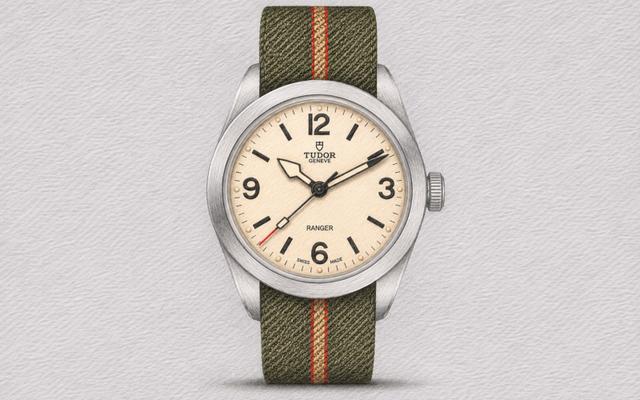
TUDOR
$3,594
Ranger 39mm
M79950-0011
Beige 'Dune' Dial on Fabric Strap

TUDOR
$3,307
Northflag
M91210N-0001
First Gen on Integrated Steel Bracelet

TUDOR
$3,270
Royal 41mm
M28600-0011
Salmon Diamond Dial

TUDOR
$3,257
1926 - 41mm
M91651-0009
White Embossed Dial, Rose Gold Two-Tone

TUDOR
$3,257
Royal 40mm
M2840D1A0-0001
Black Baton Dial with Gold Detail

TUDOR
$3,006
1926 - 39mm
M91551-0002
Silver Diamond-Set Dial, Rose Gold Two-Tone Bracelet